Help scientists find spacetime warps in these Euclid Space Telescope images
Help scientists find spacetime warps in these Euclid Space Telescope images A new Space Warps project lets the public hunt for gravitational lenses in data f...
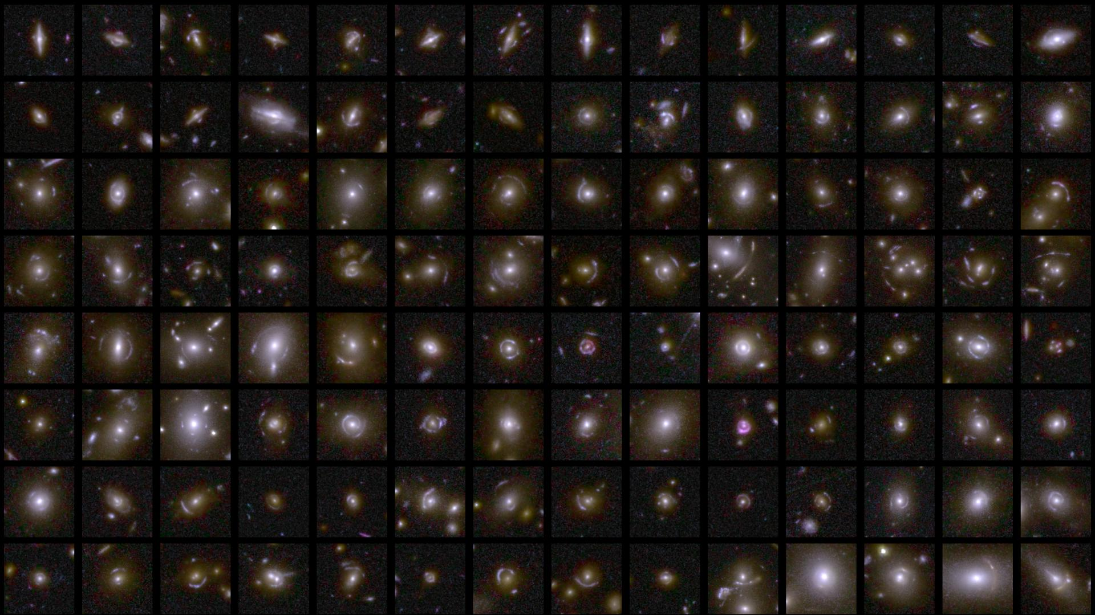
112 squares showing various spacetime warps.
TL;DR
Help scientists find spacetime warps in these Euclid Space Telescope images A new Space Warps project lets the public hunt for gravitational lenses in data from the Euclid Space Telescope. The update is narrow, but it is enough to publish a verified record while the story develops.
Context
Help scientists find spacetime warps in these Euclid Space Telescope images is a tech story tied to US. The available record supports a narrow update: Help scientists find spacetime warps in these Euclid Space Telescope images A new Space Warps project lets the public hunt for gravitational lenses in data from the Euclid Space Telescope.
Measured Take is treating this as a verified-facts brief rather than a full narrative rewrite because the AI writing provider did not return a usable article draft. That means the article should do three things: preserve what is known, avoid adding unsupported interpretation, and make clear what would change the significance of the item.
Key Facts
- Help scientists find spacetime warps in these Euclid Space Telescope images A new Space Warps project lets the public hunt for gravitational lenses in data from the Euclid Space Telescope. - A new citizen science project invites the public to scan never-before-seen images from the Euclid Space Telescope in search of galaxies bending spacetime. - Led by the European Space Agency (ESA), the initiative, called Space Warps, uses data from Euclid to crowdsource the search for rare cosmic distortions known as gravitational lenses.
What It Means
The useful reading is limited but clear. The verified facts establish the event, the people or organizations involved, and the immediate context. They do not, by themselves, prove broader motives, market impact, or long-term outcomes.
That restraint matters for an automated newsroom. A broken provider call should not stop publication when the extraction stage has already produced publishable facts, but it also should not invite filler. This fallback draft keeps the article bounded to the extracted claims while leaving room for a fuller rewrite when provider quality recovers.
For readers, the practical value is the separation between signal and speculation. The signal is the confirmed update above. The speculation would be any claim about strategy, motive, financial impact, competitive pressure, or public reaction that is not directly supported by the extracted evidence. Those claims should wait for stronger sourcing.
The editorial stance is therefore intentionally conservative. The article records the verified development, gives it a category and country context, and avoids turning a single source item into a broader conclusion. If additional reporting adds detail, this story can be expanded with more specific context, quotes, filings, or market data.
The next thing to watch is whether additional reporting, filings, statements, or market data add detail that changes the weight of the story. Until then, the safest takeaway is the confirmed update above, not a larger conclusion built ahead of the evidence.
Continue reading
More in this thread
‘The show must go on’: Trump returns to rescheduled White House press gala
Measured Take
Liberian Youth Use TikTok to Keep History Alive After Civil War Disrupted Oral Traditions
Measured Take
Hoa Nghiem Pagoda inaugurated in northeastern Thailand, helping preserve Vietnamese cultural identity
Measured Take
Conversation
Reader notes
Loading comments...