Harvard Graduate Benjamin Choi Turns High‑School Bionic Arm Project into Machine‑Learning Career
Benjamin Choi, creator of a mind‑controlled bionic arm in high school, graduates Harvard with dual degrees and moves into a machine‑learning research position.
TL;DR
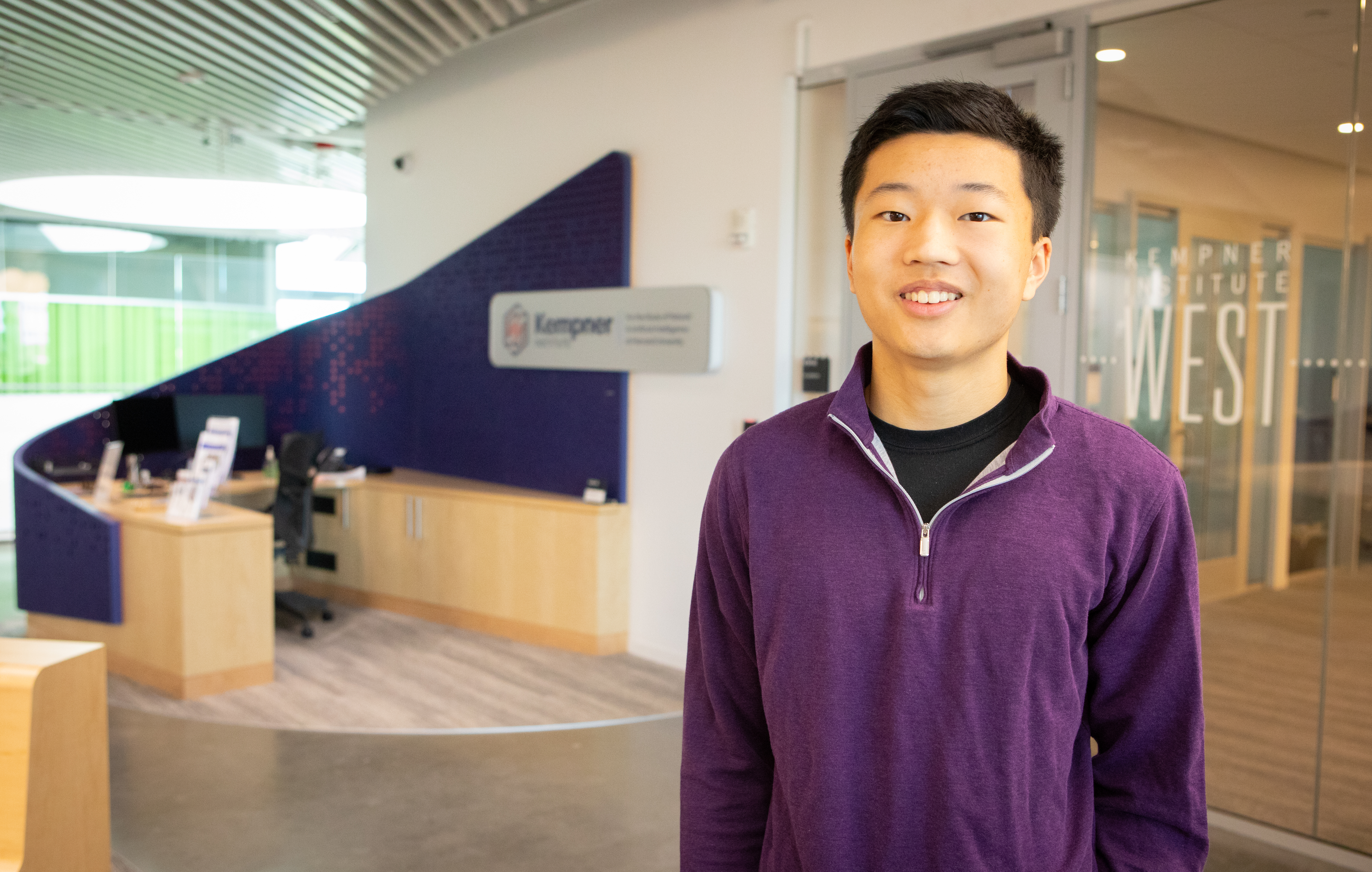
Benjamin Choi, the Virginia teen who built a mind‑controlled bionic arm, is graduating Harvard with a bachelor’s in applied mathematics and a master’s in computer science, then joining industry as a machine‑learning researcher.
Choi’s fascination with noisy brain signals began in a Virginia high school lab, where he designed software to filter out irrelevant neural activity and translate intentional commands into prosthetic movement. The project revealed how linear‑algebra techniques can isolate meaningful patterns in high‑dimensional data, a principle that underpins modern machine learning.
At Harvard’s John A. Paulson School of Engineering and Applied Sciences, Choi pursued a dual track: a bachelor’s in applied mathematics—described as the liberal arts of STEM for its interdisciplinary reach—and a concurrent master’s in computer science. Coursework such as “Geometric Methods for Machine Learning” linked abstract geometry to practical AI models, while research stints at Johns Hopkins, NASA, and Harvard’s Kempner Institute deepened his expertise in signal processing and neural data cleaning.
Choi’s senior thesis compared large‑language‑model data mappings to human emotional frameworks, extending his high‑school work on brain‑wave noise reduction. Publications as first author and mentorship from faculty cemented his transition from theory to implementation.
Graduating this spring, Choi will enter the private sector as a machine‑learning researcher. His background—spanning applied math theory, computer‑science systems, and hands‑on neural‑signal projects—positions him to tackle real‑world AI challenges where noisy data and precise interpretation intersect.
What It Means
Choi’s trajectory illustrates how early hands‑on engineering can seed advanced academic pathways and industry demand for specialists who bridge mathematics, computer science, and biomedical applications. As AI systems increasingly process imperfect sensor data, professionals with his blend of signal‑filtering insight and machine‑learning fluency will be pivotal.
Watch for Choi’s contributions to commercial AI products that must interpret noisy biological inputs, and for how universities may further integrate applied‑math curricula with AI research to produce similar talent pipelines.
Continue reading
More in this thread
Conversation
Reader notes
Loading comments...