Hanwha Power and Pembina Pipeline Launch Waste Heat Power Study at Canadian Gas Sites
Hanwha Power and Pembina Pipeline signed an MOU to evaluate waste‑heat‑to‑power systems at Canadian gas infrastructure, targeting lower‑carbon generation and improved asset efficiency.
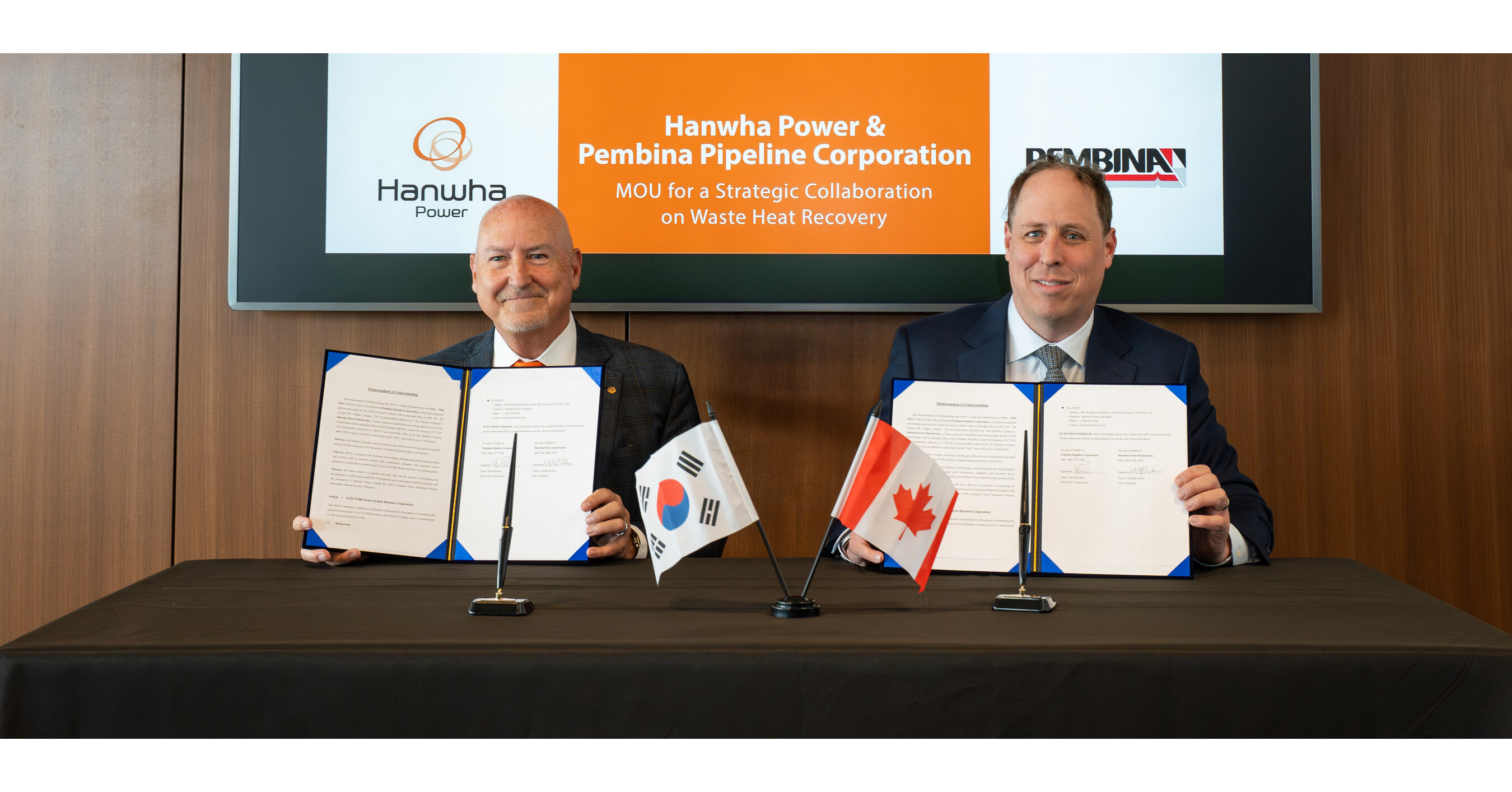
Hanwha Power and Pembina Pipeline signed an MOU to evaluate waste‑heat‑to‑power systems at Pembina’s compressor stations, aiming to cut emissions and boost efficiency. The deal ties Hanwha’s supercritical CO2 technology to Pembina’s North American midstream assets under the ITB framework linked to Hanwha Ocean’s submarine program.
Hanwha Power’s Head of the Americas, Michael Sicker, said the partnership is a key step to grow its green energy business in Canada through ITB cooperation and lower‑carbon technology. Pembina’s Senior Vice President, Commercial, Chris Rousch, noted that improving asset efficiency and value is central to its business and that the Hanwha collaboration offers added value for customers and stakeholders. The MOU falls under the ITB program connected to Hanwha Ocean Canada’s Submarine Program (CPSP), which seeks to transfer defense‑sector expertise to civilian energy projects.
Hanwha Power’s waste heat recovery system uses supercritical carbon dioxide as a working fluid, operates without water and can run uncrewed, and delivers a more compact footprint than conventional organic Rankine cycle units. By capturing waste heat from pipeline booster stations, the system generates electricity without burning additional fuel, thereby improving overall energy efficiency and lowering carbon emissions. Pembina owns a vast network of natural gas pipelines, processing facilities, and export terminals across Alberta and beyond, providing numerous sites where the technology could be piloted.
The feasibility studies will identify candidate compressor stations where waste heat is sufficient to justify a pilot installation. If successful, the project could scale to dozens of Pembina assets, creating a replicable model for other North American midstream operators seeking carbon‑reduction solutions. Investors and regulators will watch for the first field test results, expected within the next 12 to 18 months, to gauge performance, cost savings, and emissions reductions. What to watch next: the announcement of a specific pilot site and the release of preliminary technical and economic data from the joint assessment team.
Continue reading
More in this thread
Conversation
Reader notes
Loading comments...