Gradium AI CEO Says Voice AI's 'Her' Moment Remains Unfinished
Gradium AI CEO Neil Zeghidour says seamless, human‑like voice AI is still a work in progress and outlines the company's focus on STT, TTS, and S2S translation.
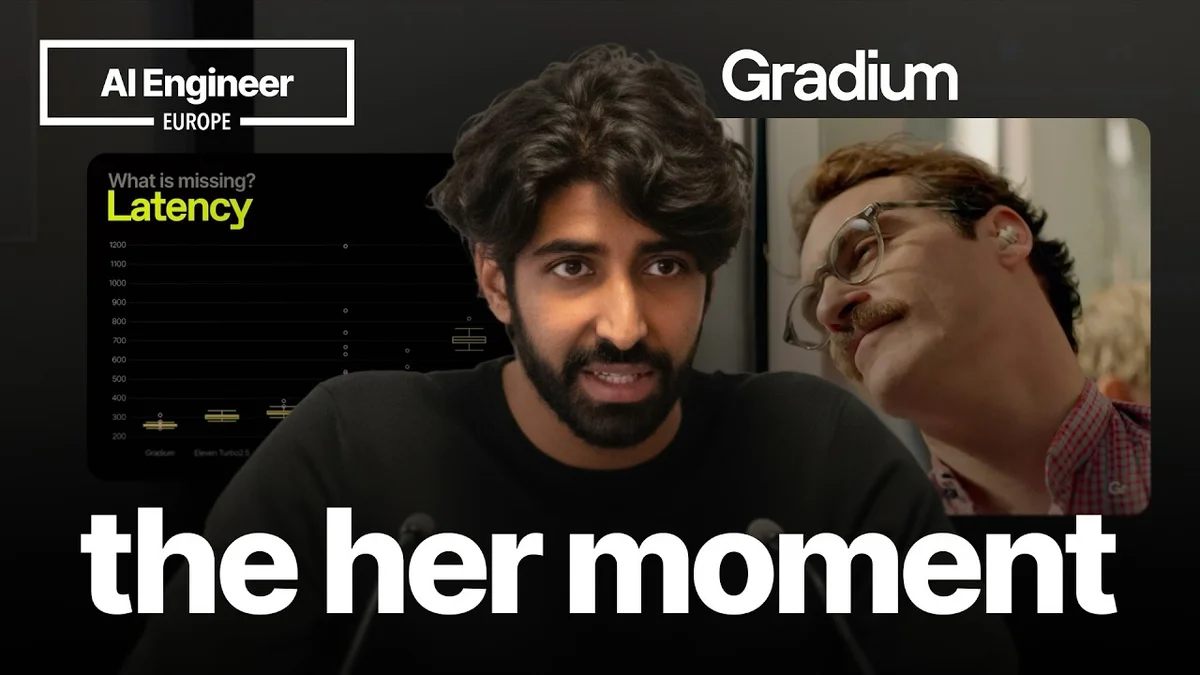
Neil Zeghidour on Voice AI's 'Her' Moment
TL;DR
Gradium AI’s Neil Zeghidour says the long‑awaited "Her" moment for voice AI is still a work in progress, and his firm is building the core technology to get there.
Context At an AI Engineer conference in London, Gradium AI’s CEO and co‑founder Neil Zeghidour addressed the state of voice artificial intelligence. He referenced the 2013 film *Her*, where an operating system engages in fully natural, empathetic conversation, as the benchmark many developers still chase.
Key Facts Zeghidour explained that current voice assistants can transcribe speech, generate spoken responses, and even translate between languages, but they fall short of the fluid, nuanced dialogue humans expect. "Achieving seamless, natural, empathetic human‑AI interaction remains a work in progress," he said.
Gradium AI’s strategy focuses on three pillars: speech‑to‑text (STT), which converts spoken words into written form; text‑to‑speech (TTS), which turns written text into a natural‑sounding voice; and speech‑to‑speech (S2S) translation, which enables real‑time spoken language conversion. The company aims to make voice the primary interface for AI, replacing typed prompts and graphical menus.
The firm is training large‑scale voice models that can be embedded in products ranging from smart speakers to customer‑service bots. By improving the underlying acoustic and linguistic models, Gradium hopes to reduce latency, increase accuracy, and add emotional nuance to spoken responses.
What It Means If Gradium succeeds, developers could integrate voice agents that understand context, detect sentiment, and respond with a tone that matches the conversation. Such capability would lower barriers for users who prefer speaking over typing, expanding AI adoption in sectors like healthcare, education, and retail.
However, the roadmap highlights technical hurdles: capturing subtle human cues, handling diverse accents, and ensuring privacy in voice data processing. Industry observers will watch Gradium’s upcoming beta releases for STT, TTS, and S2S modules to gauge how quickly the "Her" moment moves from concept to reality.
What to watch next: Gradium AI’s product launch timeline and any partnership announcements that bring its voice models into consumer devices.
Continue reading
More in this thread
Conversation
Reader notes
Loading comments...