George Russell Secures Sprint Pole at Canadian GP, Edges Teammate Antonelli
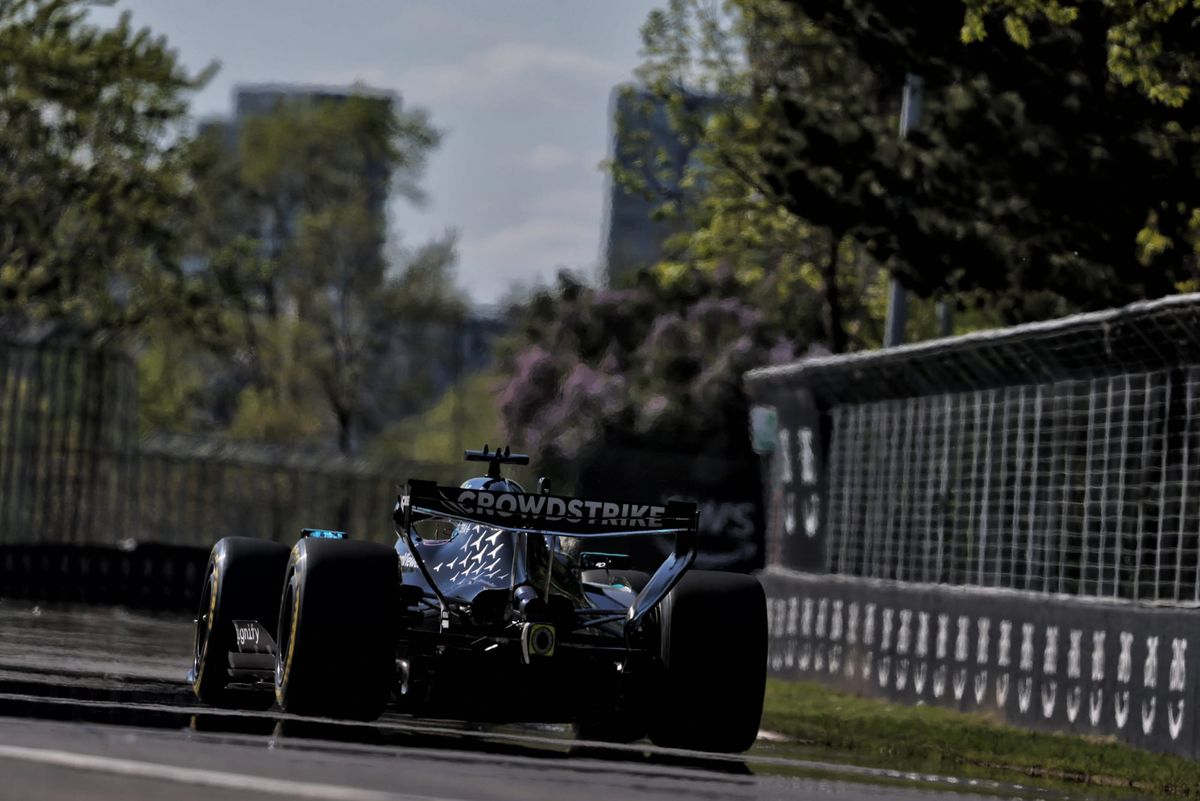
George Russell beat teammate Kimi Antonelli to take sprint pole at the 2026 Canadian Grand Prix, edging him by 0.068 seconds in a tightly contested qualifying session.
TL;DR
George Russell claimed sprint pole for the 2026 Canadian Grand Prix, beating Mercedes teammate Kimi Antonelli by 0.068 seconds.
Context
Sprint qualifying sets the grid for a short race that awards championship points and influences tire strategies for the main Grand Prix. The 2026 event at Circuit Gilles Villeneuve featured a revised layout aimed at increasing overtaking zones, which made qualifying sessions especially tight.
Teams used the session to evaluate low‑fuel configurations and gather data on tire degradation. Weather conditions were dry with ambient temperatures around 22 °C, providing consistent grip across the field.
Mercedes has won the Canadian GP sprint pole twice in the last three seasons, showing consistent performance on this circuit. The team’s recent upgrades to the W15’s aerodynamics aimed to improve high‑speed cornering, a trait valued at Villeneuve’s fast straights.
Key Facts
Russell’s lap of 1 minute 12.965 seconds secured the top spot. Antonelli followed in 1 minute 13.033 seconds, a gap of 0.068 seconds. Lando Norris took third at +0.315 seconds, while Oscar Piastri was fourth at +0.334 seconds. Further down the order, Lewis Hamilton (+0.361s) and Charles Leclerc (+0.445s) completed the top six. Max Verstappen (+0.539s) and Isack Hadjar (+0.640s) rounded out the top eight. Notably, Nico Hulkenberg and Gabriel Bortoleto did not set a timed lap due to technical issues.
What It Means
Russell’s pole position gives Mercedes a chance to score early sprint points, which can bolster the constructors’ tally and affect championship momentum. The small margin to Antonelli underscores the team’s internal competitiveness, potentially influencing decisions on fuel loads and pit‑stop timing for the sprint. The tight grouping—ten drivers within 1.6 seconds of the pole time—suggests that race‑day outcomes will depend heavily on execution, tire management, and adaptability to changing conditions. Teams may prioritize preserving tire life over outright speed in the sprint.
Watch how the sprint result shapes the starting grid for the main Grand Prix and whether Mercedes can translate the pole advantage into tangible points.
Continue reading
More in this thread
Conversation
Reader notes
Loading comments...