Gautier Fifth Graders Leverage AI and 3D Printing to Craft Drug-Free City Blueprint
Gautier fifth graders are leveraging AI and 3D printing to design a drug-free city blueprint, responding to local community safety needs and integrating advanced tech into learning.
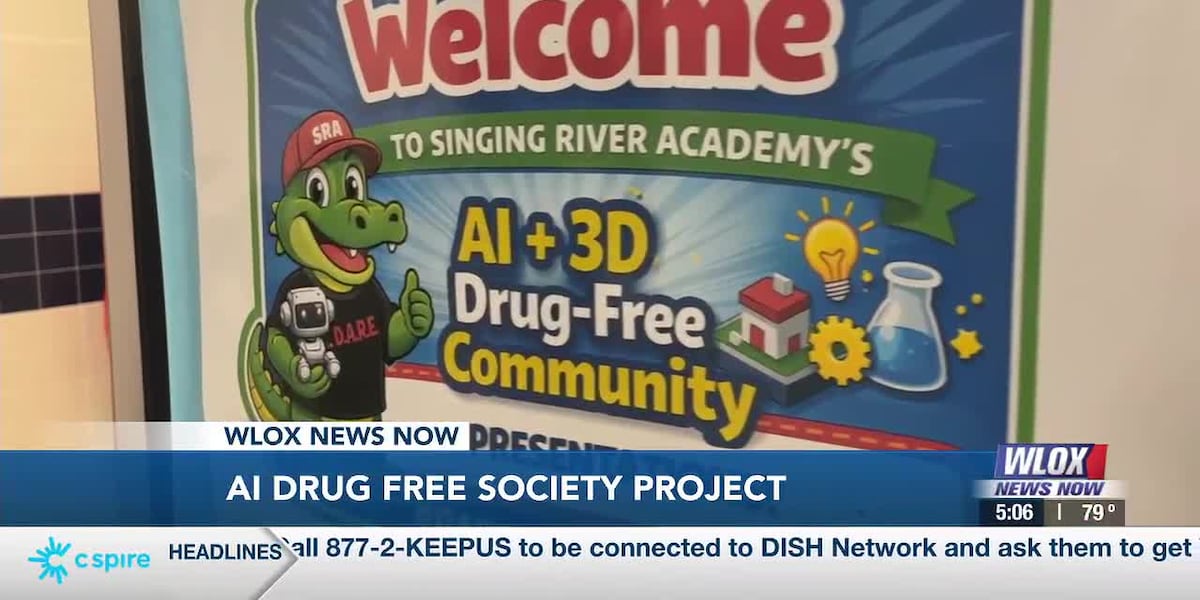
Gautier fifth graders are using artificial intelligence and 3D printing to design a blueprint for a drug-free city, applying advanced technology to a societal challenge.
Recent events in neighboring communities highlight the persistent need for effective community safety initiatives. On Friday, the Picayune Police Department announced the arrest of two individuals on drug trafficking charges. This incident underscores ongoing efforts by law enforcement to combat the spread of illegal substances within the region.
Separately, a Pascagoula police officer faced termination following an arrest on child abuse charges. These distinct but related local incidents collectively emphasize the broader challenges communities navigate in maintaining public safety and well-being. They set a backdrop against which solutions, even conceptual ones, gain significance.
In Gautier, fifth-grade students are directly engaging with these societal challenges through an innovative educational project. They are leveraging artificial intelligence (AI), a field of computer science that enables machines to perform tasks typically requiring human intelligence, and 3D printing, a manufacturing process that builds three-dimensional objects layer by layer from a digital design.
The students' primary objective is to craft a comprehensive blueprint for a drug-free city. This hands-on application integrates cutting-edge technology with civic education. It provides practical experience in urban planning, considering factors that contribute to public safety and community health.
Through this project, students learn about data analysis and spatial design, identifying potential vulnerabilities and designing preventive infrastructure. The initiative aims to foster a deeper understanding of how city planning and technological tools can address complex social issues like substance abuse.
This initiative demonstrates a forward-thinking approach to elementary education, integrating advanced technological tools into the curriculum. It moves beyond abstract learning, offering students a tangible way to apply theoretical knowledge to real-world problems.
The project positions young learners as active participants in addressing community challenges. By conceptualizing a drug-free environment, they explore strategies that range from urban design to social programs. This fosters a sense of responsibility and empowers them to envision solutions.
The integration of AI and 3D printing into a fifth-grade classroom signals a shift in educational pedagogy, emphasizing hands-on, problem-based learning. It prepares students for a future economy where technological literacy and innovative thinking are crucial skills across various professional fields.
Watch for how similar student-led technological applications might shape future community design efforts and influence educational curricula focused on civic innovation.
Continue reading
More in this thread
Tencent Targets Over $5 Billion AI Investment as DeepSeek Launches New LLM Models
Alex Mercer
New Glenn Launch Succeeds but Loses Payload as Canada Funds Nova Scotia Spaceport
Alex Mercer
CIOs Warned: Delaying AI Architecture Overhaul Fuels Rising Costs and Governance Risks
Alex Mercer
Conversation
Reader notes
Loading comments...