Flour Millers Seek Policy Stability Amid Rising Wheat Output Forecasts
Flour millers urge stable government policies amidst global wheat production increases, aiming to counter volatility and secure supply chains.
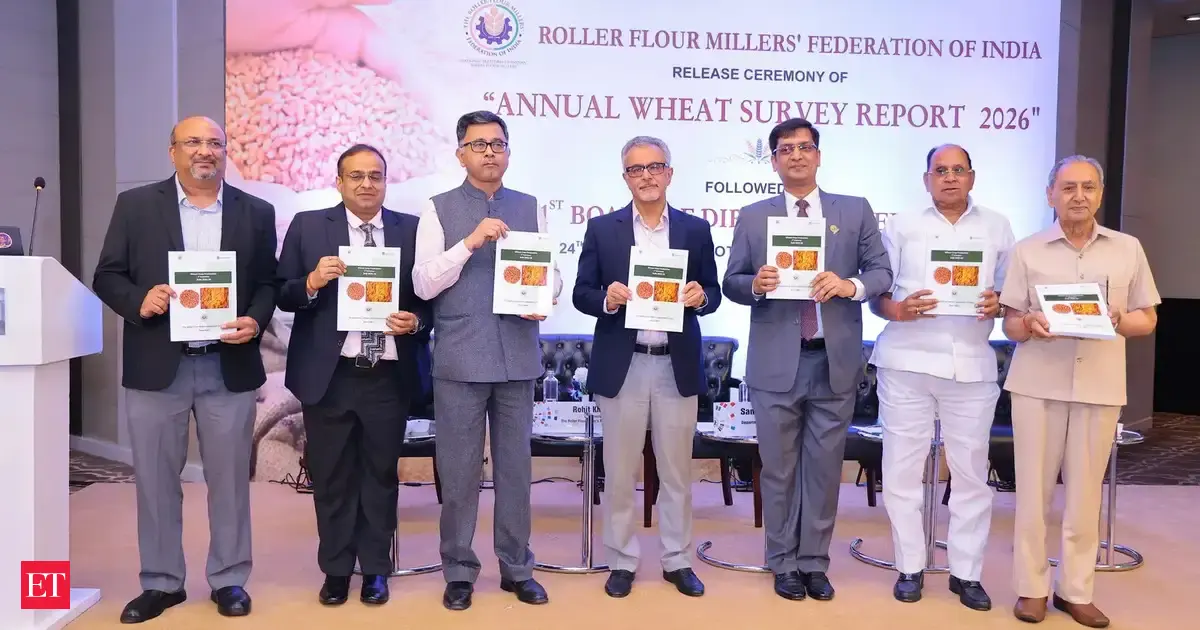
TL;DR
Flour millers advocate for consistent government policies to stabilize operations following a volatile year, even as global wheat output projections show an increase. They seek predictable frameworks to manage supply chain disruptions and alleviate financial pressures.
The past year imposed significant instability on the milling sector. It experienced sharp price swings and considerable financial strain across the entire value chain, from farmers to processors. Rising input, logistics, and packaging costs, exacerbated by global geopolitical tensions, directly contributed to this period of high volatility.
Amid these ongoing challenges, global wheat production for Rabi 2025-26 is projected to reach 1,106.5 lakh metric tonnes (110.65 million metric tonnes). This figure marks an increase from the previous year's total of 1,096.3 lakh metric tonnes (109.63 million metric tonnes). This rise in output correlates with an expanded total sown area, which grew to 348.34 lakh hectares (34.83 million hectares), and an improved average yield of 3,176 kilograms per hectare.
Flour millers now actively urge policy stability from authorities, emphasizing the critical need for predictable frameworks to operate effectively. They specifically request the regular release of cumulative national wheat stock data through official channels. This transparency, they argue, supports informed business decisions and helps reduce market distortions.
Another key demand is a predictable Open Market Sale Scheme (OMSS) policy. Millers seek clear pricing, quantities, and schedules for such sales, developed through comprehensive stakeholder consultation, to avoid ad-hoc interventions that disrupt planning. They also advocate for open licenses for all wheat products, including bran, free from restrictive conditions, to foster broader market participation.
Furthermore, the industry highlights the importance of export promotion. They call for freight support and other incentives for value-added wheat exports, seeing this as a pathway to boost domestic capacity utilization and employment. Alongside these measures, millers advocate for liquidity support schemes, similar to emergency credit lines, to ease financial stress amid tight operating margins and persistent global uncertainty.
These calls for policy clarity aim to foster a more stable and resilient environment for flour production and distribution. While the increased global wheat output provides a potentially robust supply backdrop, the sector’s ability to effectively leverage this, maintain competitive pricing, and ensure food security ultimately hinges on consistent and transparent domestic policies that support the entire value chain.
Stakeholders will closely monitor the government’s response to these appeals. The implementation of clear, long-term policies and collaborative frameworks will likely determine the milling sector's stability and growth trajectory in the coming year, impacting consumer prices and market confidence.
Continue reading
More in this thread
Conversation
Reader notes
Loading comments...