Farage vows to reshape Lords and courts if Reform wins power
Nigel Farage threatens to overhaul the House of Lords and judicial appointments at Reform UK's conference, framing the moves as essential to deliver his party's agenda.
# Farage vows to reshape Lords and courts if Reform wins power
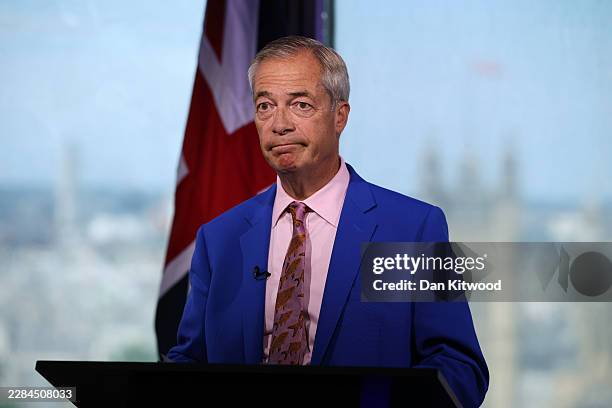
Nigel Farage told delegates at Reform UK’s annual conference that a Reform government would declare a national emergency and overhaul the House of Lords and the judicial appointment system. He framed the changes as necessary to deliver the party’s first‑100‑day pledges, which include ending small‑boat crossings, cutting energy bills by £250 per household and scrapping net‑zero policies.
The speech was repeatedly interrupted by protesters. Farage also faced questions about recent donation allegations that surfaced in an undercover Channel 4 investigation. He rejected the claims, saying the party had taken no illegal money and that the accusations were “because they’re scared of us”.
In the opening minutes, Farage outlined Reform’s 100‑day agenda. He promised to stop small‑boat crossings, reduce energy costs by £250 a year for each household and end what he called the “net‑zero lunacy”. He argued that the current government had failed to act on these issues and that only Reform could deliver.
To guarantee delivery, Farage said Reform would declare a national emergency. He warned that Parliament would sit “24 hours a day, six days a week” until the required legislation passed. He then turned to the House of Lords, describing it as a potential obstacle. Farage said the Lords would be expected to honour Reform’s pledges, but if they refused he would appoint “hundreds of new peers” to secure a majority. He added that a referendum on the Lords’ composition could follow, arguing that the public would “sweep away” an uncooperative upper chamber.
Farage also targeted the judiciary. He claimed that judges could use conventions such as the European Convention on Human Rights to block government policy, particularly on deportations. He promised to remove that ability and to reconsider how judges are appointed. “We don’t want the courts striking down the will of the people,” he said, emphasizing Parliament’s primacy in making law.
The speech also touched on civil service reform. Farage said civil servants who “try to obstruct us” would be replaced by people from business. He presented the move as a way to inject “courage” into government and to avoid the “same” approach he accuses the Conservatives and Labour of repeating.
The conference came after a turbulent summer for Reform. Two senior officials resigned, and the party launched an internal probe into donation claims aired in a Channel 4 report. The undercover footage showed two men suggesting a method to circumvent electoral law to secure a £500,000 foreign donation. Farage dismissed the comments as “loose pub talk” and insisted the party had done nothing illegal.
Farage’s rhetoric marks a sharp escalation from previous Reform messaging, which has largely focused on fiscal cuts and immigration control. By threatening structural changes to the Lords and the courts, he is challenging long‑standing constitutional conventions. The House of Lords, while unelected, performs a revising function and its composition is protected by the 1911 and 1949 Parliament Acts. Overhauling it by mass peer appointments would likely trigger legal challenges and could provoke a constitutional crisis.
Similarly, altering judicial appointments or limiting the influence of the European Convention on Human Rights would require legislation that conflicts with the UK's obligations under the European Convention on Human Rights Act and, potentially, the European Court of Human Rights. Past attempts to curb judicial review have been met with strong opposition from legal bodies and civil‑society groups.
Political analysts note that Farage’s proposals are designed to appeal to voters frustrated with perceived governmental inertia. However, the feasibility of implementing such sweeping reforms without a parliamentary majority in the Commons is doubtful. Even if Reform secured a plurality, it would still need to negotiate with other parties to pass constitutional amendments, many of which require super‑majorities.
The speech also signals Reform’s intent to position itself as a government‑in‑waiting rather than a protest movement. By laying out concrete, if controversial, policy steps, the party aims to convert its anti‑establishment brand into a governing blueprint. Whether the electorate will accept a platform that threatens to reshape core institutions remains an open question.
Farage concluded by urging delegates to “act, not wait”, and warned that Labour leader Andy Burnham would likely call an early election in spring 2027. He framed Reform as the only force capable of delivering on promises within the first 100 days of power.
The conference ended with mixed reactions. Supporters cheered the boldness of the proposals, while critics warned that the suggested changes could undermine checks and balances that safeguard democratic governance. As Reform prepares for the next general election, the party’s ability to translate rhetoric into viable policy will be a key test of its credibility.
Continue reading
More in this thread
Burnham tells MPs Britain took 'a series of wrong turns' for 40 years and pins blame on Brexit and Thatcher
Nadia Okafor
Kast's Eight Constitutional Amendments Draw Human Rights Watch Call for Rejection
Nadia Okafor
Shettima Leaves Abuja to Represent Tinubu at African Union Peace Summit in Luanda
Nadia Okafor
Conversation
Reader notes
Loading comments...