F1 Manufacturers Reject FIA’s Proposed Complex Engine Ranking System, Prefer Simple Power Metric
Formula 1 manufacturers rejected the FIA's complex engine performance ranking system last year, opting for a simple power metric. This impacts ADUO.
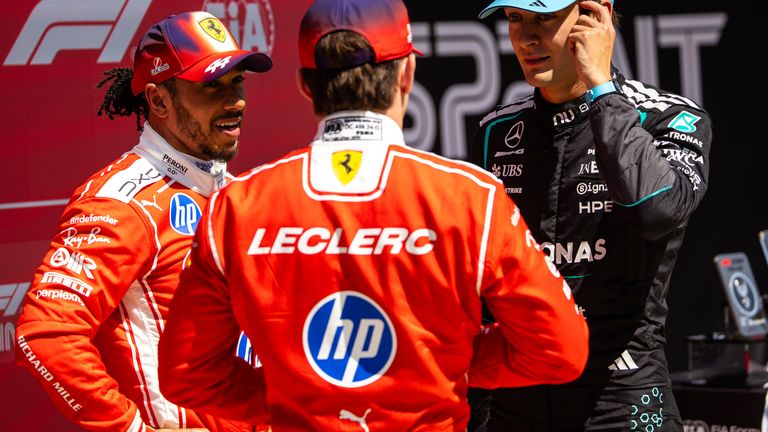
Lewis Hamilton, Charles Leclerc and George Russell
Formula 1 engine manufacturers collectively turned down the FIA's proposal for a multi-faceted engine performance ranking system last year. They instead insisted on a simpler measurement, focusing solely on internal combustion engine power output.
The Fédération Internationale de l'Automobile (FIA) offers Additional Development and Upgrade Opportunities (ADUO) to Formula 1 power unit manufacturers whose engines are deemed to be lagging behind the series' performance benchmark. This system allows teams to invest more in engine development, aiming to level the competitive field over time. The process for determining these performance rankings has become a key point of discussion among teams and the governing body.
Last year, Formula 1 power unit manufacturers explicitly rejected the FIA's offer for a more intricate process to establish engine performance rankings. The proposal would have considered various technical parameters, such as turbo pressures, turbo diameters, and plenum operating temperatures. Instead, manufacturers collectively insisted on maintaining a simple system, centered on a straightforward power metric. The FIA acknowledges that accurately assessing engine performance rankings presents significant difficulties, especially when considering the intricate interplay between engine design choices and overall car integration, like smaller turbos for driveability or specific exhaust configurations. However, the governing body will proceed with a metric based entirely on the internal combustion engine's power output.
This decision means that the FIA's upcoming declaration on the engine pecking order, which dictates eligibility for ADUO, will rely on a singular power measurement. While ADUO provides manufacturers with additional development opportunities and resources, it does not function as a "balance of performance" mechanism designed to directly equalize cars. Instead, it offers a pathway for teams behind the curve to invest further in their power units. The simplification of the ranking metric might overlook design philosophies where manufacturers intentionally compromise raw power for other gains, such as improved car handling or aerodynamic benefits. The racing world now awaits the FIA's official determination of the engine pecking order and subsequent ADUO allocations, which will reveal the immediate competitive implications of this simplified assessment.
Continue reading
More in this thread
Political Pressure Almost Kept Iran, North Korea, and the Netherlands Out of World Cups
Marcus Cole
Jude Bellingham Rejected Double Salary Offer to Pursue Development in Germany
Marcus Cole
Bellingham Turned Down Man Utd's Double Salary Offer to Prioritize Development Over Money
Marcus Cole
Conversation
Reader notes
Loading comments...