Ex-World Bank chief urges China to curb food and fertilizer stockpiling
David Malpass, former World Bank president, said China holds the largest food and fertilizer stockpiles and could stop adding to them, while disputing its developing‑nation claim.
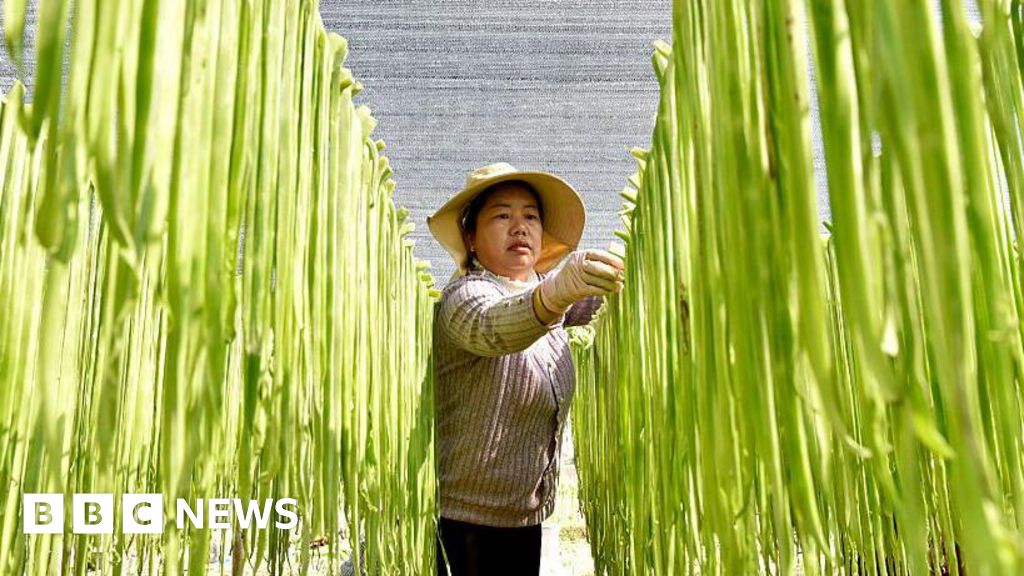
A farmer is drying Gong Cai strips, a vegetable of the lettuce family, in the fields on March 5, 2026 in Dali Bai Autonomous Prefecture, Yunnan Province of China.
TL;DR: Former World Bank president David Malpass urged China to stop adding to its food and fertilizer stockpiles to ease global supply pressures, noting the country’s large reserves and its status as the world’s second‑largest economy. He also questioned China’s self‑description as a developing nation in international institutions.
Context: Global food and fertilizer markets have been strained since disruptions in the Strait of Hormuz, a key chokepoint for shipments, worsened by the Iran conflict. Nations are scrambling to secure supplies ahead of spring planting.
China, which produces about a quarter of the world’s fertilizer, has limited exports of several fertilizer types since March, saying it needs to protect domestic supplies. These restrictions build on measures introduced in 2021.
Key Facts: David Malpass, who led the World Bank from 2019 to 2023, said China holds the world’s largest stockpiles of food and fertilizer and could stop adding to them. He noted that halting further accumulation would help ease the global shortage.
In the previous year, China produced roughly 25 % of global fertilizer and exported goods worth more than $13 billion. Malpass also argued that China’s claim to be a developing nation lacks credibility given its position as the world’s second‑largest economy.
In response, a spokesperson for the Chinese embassy in Washington said China is universally recognized as the largest developing country and that the blame for supply chain disruptions cannot be shifted onto Beijing. The spokesperson added that upholding developing‑country status is a legitimate right for China.
What It Means: Analysts say that if China curtails its stockpiling, global fertilizer availability could improve, potentially lowering prices for farmers worldwide. Conversely, any reduction in Chinese exports might tighten supply elsewhere if other producers cannot fill the gap.
The debate over China’s developing‑country status could affect its eligibility for preferential treatment in trade agreements and climate finance, though any change would require consensus among member states of the WTO and World Bank.
Observers will watch whether China adjusts its export policies in the coming months and how international institutions respond to the developing‑country discussion.
Continue reading
More in this thread
Audi to Launch First Full‑Size SUV, the Q9, This Summer
Elena Voss
JP Morgan Sees Oil Above $100 Through 2026 Despite Strait Reopening Prospects
Elena Voss
Enhanced Group CEO Martin Maximilian Receives Over 10 Million Shares and 1.9 Million Options in May 2026 Business Combination
Elena Voss
Conversation
Reader notes
Loading comments...