EU Carbon Market Cuts Power Emissions by 21%—A Blueprint for Effective ETS Design
EU's emissions trading system reduced electricity CO₂ by 21% from 2005‑2020, outperforming NZ and Korea. Stronger rules prove essential for carbon market success.
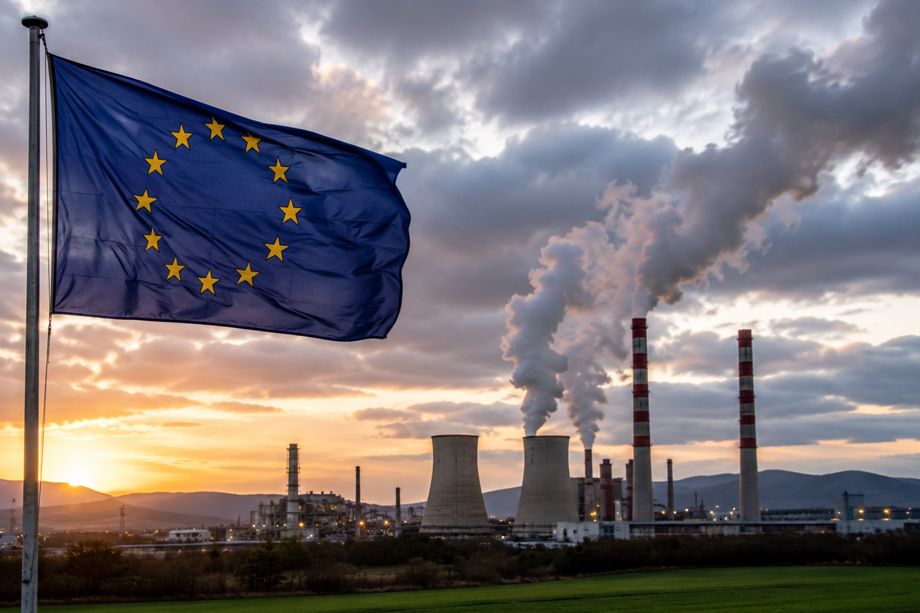
*TL;DR: The EU Emissions Trading System lowered power‑sector CO₂ emissions by 21.3% between 2005 and 2020, while New Zealand’s and South Korea’s markets lagged due to weaker design.
Context Carbon markets price pollution by requiring firms to hold permits for each ton of CO₂ emitted. Firms that cut emissions can sell excess permits; those that pollute more must buy them. The effectiveness of such systems depends on how tightly the rules are set.
Key Facts - The EU’s market, launched in 2005, reduced electricity‑sector emissions by 21.3% over 15 years compared with a scenario without the scheme. Overall national emissions in the bloc fell 15.6% in the same period. - In the older EU‑15 members, power‑sector emissions dropped by more than 30%, reflecting the impact of stricter caps, reduced free allowances, and greater auctioning of permits. - New Zealand’s system, started in 2008, trimmed electricity emissions by roughly 1.3 million tons but failed to curb national emissions because agriculture—accounting for about 50% of the country’s greenhouse gases—was excluded. - South Korea’s market began in 2015 with generous free permits and an oversupply of allowances, yielding little early impact. Later reforms that increased auctioning and tightened benchmarking sparked measurable declines in both power and economy‑wide emissions.
What It Means The comparative study shows that a carbon market only drives real cuts when it tightens over time. The EU’s gradual reduction of free permits and steady lowering of the emissions cap created a clear price signal, pushing utilities toward renewables and efficiency upgrades. In contrast, leaving a major source like agriculture out of the scheme, as New Zealand did, limits overall effectiveness despite sectoral gains. South Korea’s experience illustrates that initial design flaws can be corrected, but the lag delays climate benefits.
Policymakers aiming for deeper decarbonization should prioritize broad sector coverage, declining caps, and limited free allocations. Stronger pricing signals compel investment in low‑carbon technology and prevent emissions from simply shifting to uncovered sectors.
Looking ahead, watch how the EU refines its cap‑and‑trade rules post‑2020 and whether other nations adopt similar tightening pathways to boost market performance.
Continue reading
More in this thread
Portugal’s Last Circus Elephant Julie Moves to Europe’s First Large‑Scale Sanctuary
Dr. Leo Tanaka
Portugal’s Last Circus Elephant Julie Moves to Europe’s First Large‑Scale Sanctuary
Dr. Leo Tanaka
Valders High School Wins Team Title at 30th WPS Solar Olympics
Dr. Leo Tanaka
Conversation
Reader notes
Loading comments...