Embry-Riddle Students’ Lunar Regolith Battery Advances to NASA RASC-AL Finals
An Embry-Riddle student team's lunar regolith battery system, designed for multi-day energy storage on the moon, advances to the NASA RASC-AL finals, securing $7,000 for travel.
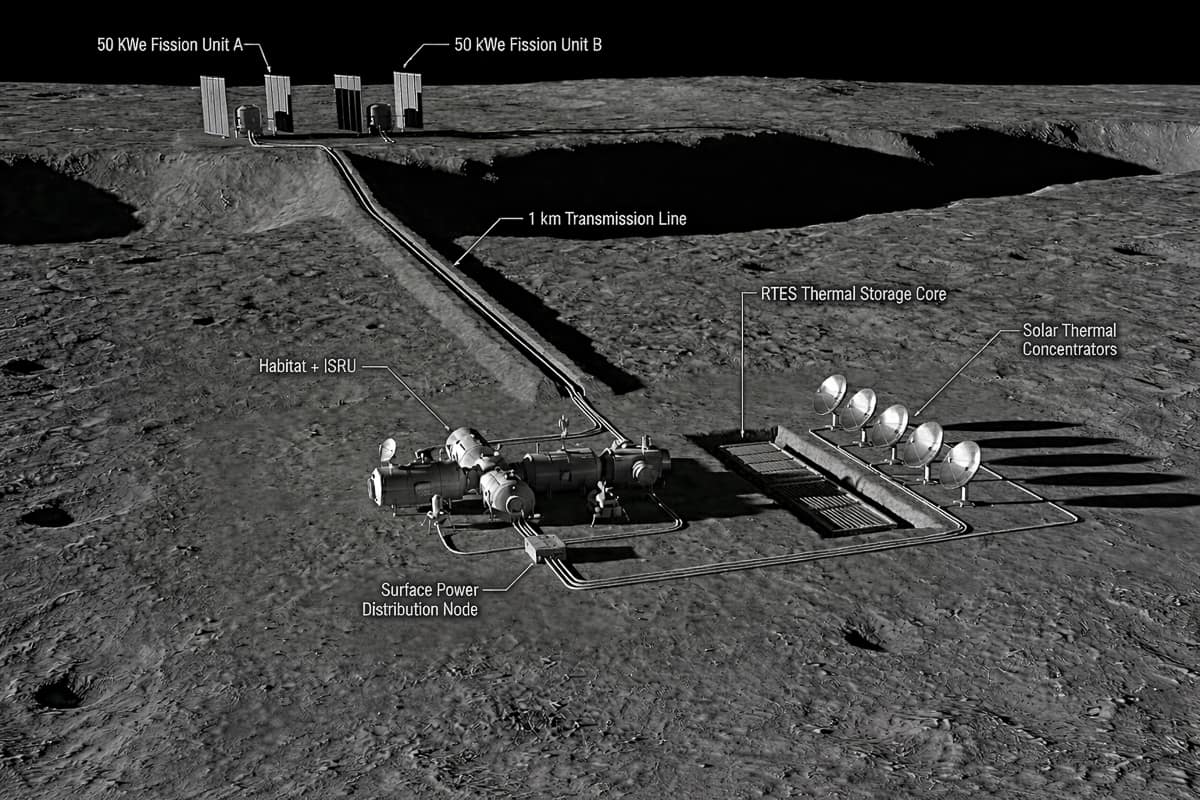
An Embry-Riddle student team has advanced to the NASA RASC-AL finals with a proposal to use lunar soil as a multi-day energy storage system. Their innovative design seeks to provide sustainable power for future lunar missions without transporting large battery systems from Earth.
A team of students from Embry-Riddle Aeronautical University has developed a system designed to provide sustained energy storage on the moon. This approach addresses the significant challenge of powering long-duration lunar missions, aiming to reduce the need for transporting heavy battery units from Earth. The system operates by collecting solar heat during the lunar day, storing this thermal energy within the lunar soil, known as regolith, and then converting it into electricity during the two-week lunar night.
This innovative concept earned the Embry-Riddle team a spot among the 14 teams selected for the NASA Revolutionary Aerospace Systems Concepts – Academic Linkage (RASC-AL) final competition. The RASC-AL program connects academia with the aerospace community, fostering innovation and workforce development for NASA’s exploration goals. One team member characterized the design simply, stating, "we’re using the moon as a battery." This unique method leverages in-situ resources, marking a departure from traditional energy storage solutions.
To support their participation, each finalist team received $7,000 for travel. They will present their comprehensive work at an in-person showcase on June 2 in Cocoa Beach, Florida. This event will allow them to demonstrate their project to NASA leaders, industry professionals, and other finalists, potentially influencing future mission architectures.
The project addresses a critical challenge for lunar exploration, where continuous power during the long lunar night is essential for operational continuity and crew safety. Solutions like this could enable longer-duration missions, facilitate scientific endeavors, and support the establishment of permanent human presence on celestial bodies. The final presentations will highlight the potential impact of these academic innovations on NASA's Artemis program and future human missions to Mars.
Continue reading
More in this thread
Amazon Deepens Anthropic Investment as AI Startup Commits $100 Billion AWS Spend
Alex Mercer
ServiceNow’s AI‑Driven Now Assist Tops $600M ACV While Tesla Q1 Delivery Gap Hits 12%
Alex Mercer
Artemis II Rocket Reaches 60,863 mph Relative to Earth During Lunar Flyby
Alex Mercer
Conversation
Reader notes
Loading comments...