Embry-Riddle Student Team’s Moon‑Battery Concept Reaches NASA RASC‑AL Finals
An Embry-Riddle student team reaches NASA RASC-AL finals with an innovative lunar energy storage system, proposing to use the Moon as a giant battery for future missions.
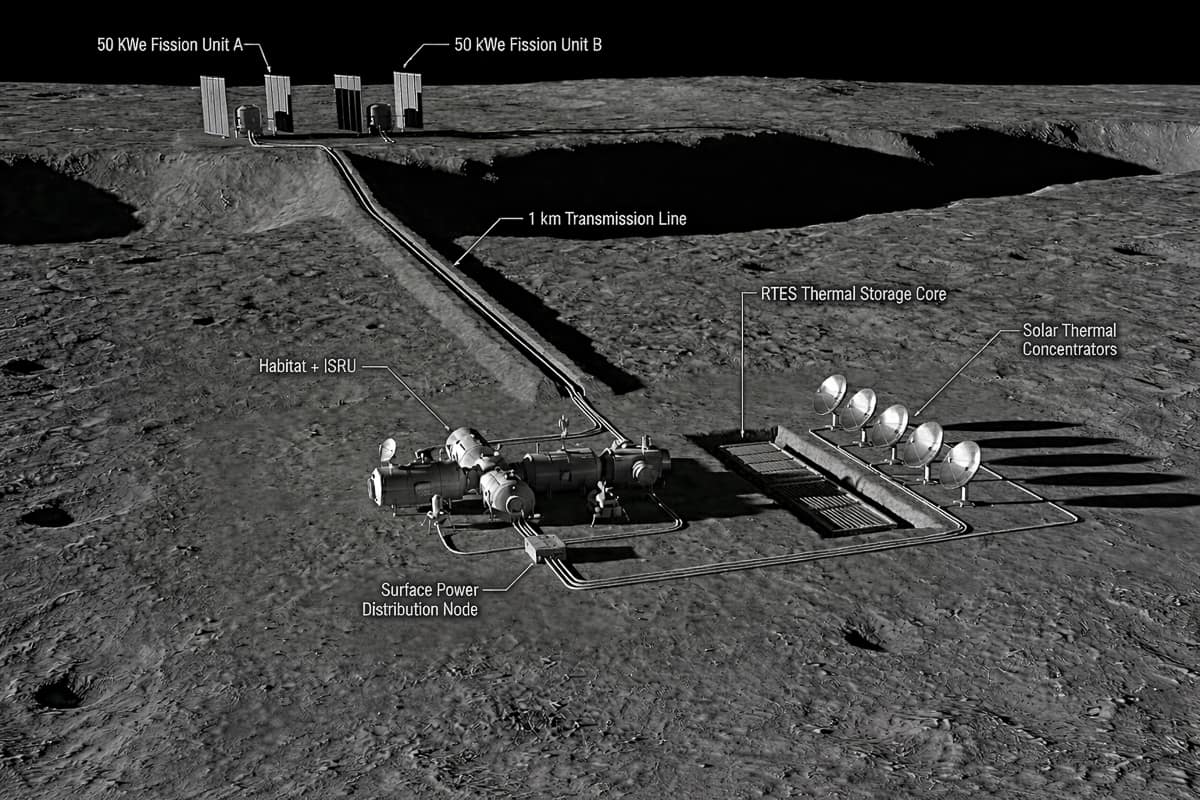
An Embry-Riddle student team advanced to the finals of NASA's RASC-AL competition with a concept for using lunar soil as a multi-day energy storage system, effectively turning the Moon into a battery.
Lunar missions require robust, long-duration power systems to support sustained human presence. Extended lunar nights, lasting approximately two Earth weeks, challenge energy solutions reliant solely on solar panels. Transporting heavy battery systems from Earth to the Moon adds significant mission cost and complexity.
The Embry-Riddle team developed a solution to these challenges. Their system collects solar heat during the lunar day, storing this thermal energy within the lunar soil, known as regolith. During the two-week lunar night, the stored heat converts into electricity, providing continuous power without external fuel. Team lead Naiyar Shaman described this innovative approach, stating, "In simple terms, we’re using the moon as a battery."
This project earned the Embry-Riddle team a spot among 14 finalists in NASA’s Revolutionary Aerospace Systems Concepts – Academic Linkage (RASC-AL) competition. This program specifically aims to foster aerospace innovation and develop the future workforce. Each finalist team received $7,000 for travel to the competition's final stage.
The team will present their concept at an in-person showcase on June 2 in Cocoa Beach, Florida. This event marks the first time the geographically dispersed team members, based in four different states, will meet in person. Their collaborative achievement underscores the ingenuity required to tackle complex challenges for future space exploration.
The RASC-AL competition provides a crucial platform for connecting academic research with active NASA and industry needs. Such student-led initiatives contribute directly to real-world problems relevant to programs like NASA's Artemis mission and long-term human missions to Mars. This engagement builds critical skills and provides networking opportunities for the next generation of space engineers and scientists.
What to watch next: The June 2 showcase will determine which concepts offer the most viable paths forward for future lunar energy architectures, potentially influencing NASA's ongoing exploration and settlement strategies.
Continue reading
More in this thread
Amazon Deepens Anthropic Investment as AI Startup Commits $100 Billion AWS Spend
Alex Mercer
ServiceNow’s AI‑Driven Now Assist Tops $600M ACV While Tesla Q1 Delivery Gap Hits 12%
Alex Mercer
Artemis II Rocket Reaches 60,863 mph Relative to Earth During Lunar Flyby
Alex Mercer
Conversation
Reader notes
Loading comments...