Domestic rates debt in Northern Ireland tops £1 million, up over 50% year‑on‑year
Domestic rates arrears in NI passed £1m in 2025/26, a 51% rise. See causes, impacts and what to watch next.
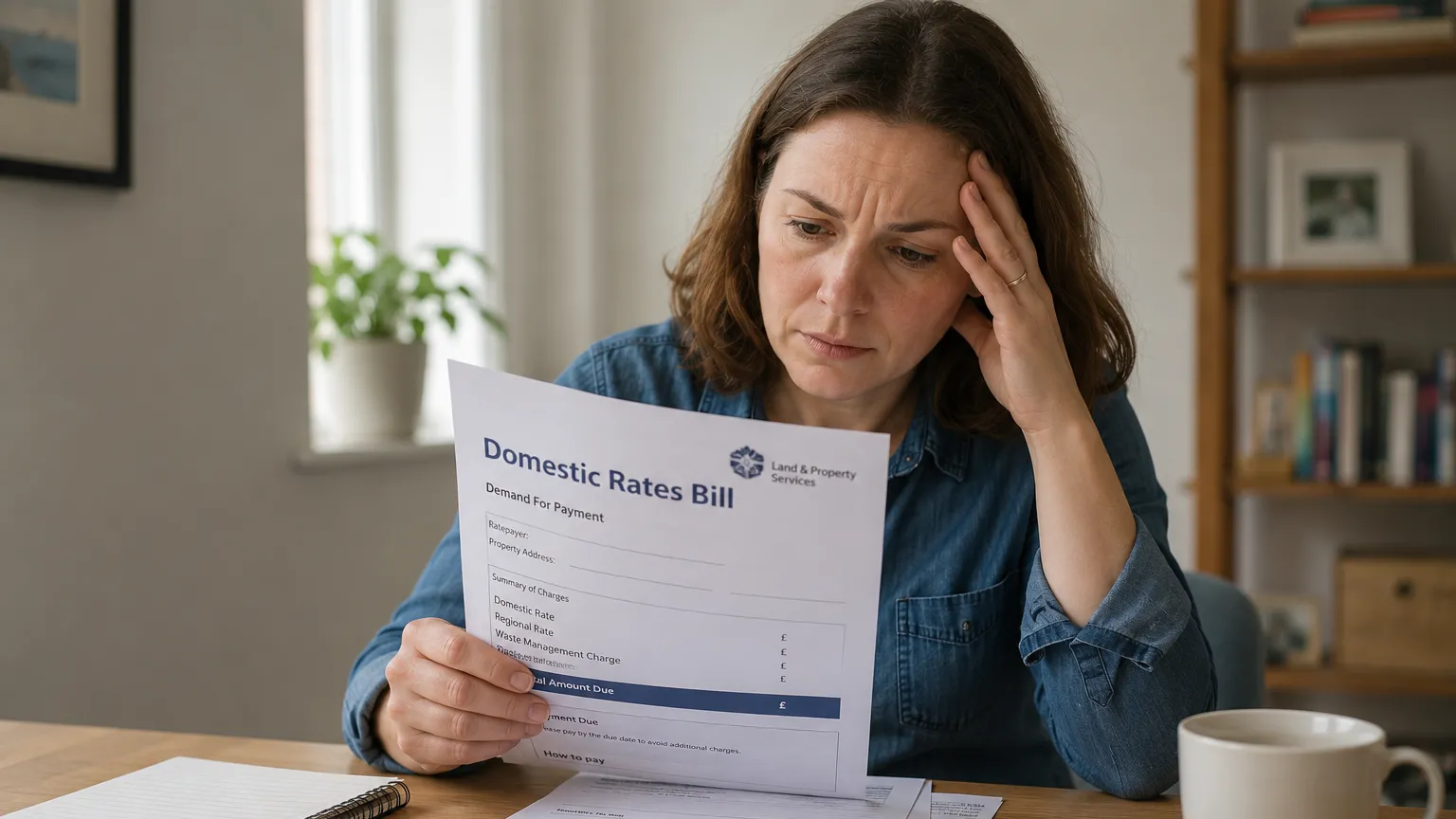
Advice NI A woman looks fretfully at a letter titled 'Domestic Rates Bill'. She has medium length brown hair and is sat at a desk.
TL;DR
Rates arrears in Northern Ireland exceeded £1 million in 2025/26, up 51% from the prior year, with average household bills at £1,239 after a 5% regional rate increase.
Context Domestic rates combine a property‑based charge, a Stormont‑set regional rate, and a council‑set district rate. Together they fund schools, hospitals, roads, leisure centres, tourism and waste management. The regional rate rose 5% this year, adding roughly £30 to the average bill, while district rates varied from 1.96% in Fermanagh and Omagh to 4.5% in Ards and North Down.
Key Facts Advice NI recorded £1,066,170 of rates debt in 2025/26, a 51% increase from £705,558 in 2024/25. The charity supported 3,500 users last year, whose average total debt was £12,145, amounting to £42.5 million across all advice cases. Sinéad Campbell, head of Money, Debt and Quality at Advice NI, warned that rates bills should be treated as a priority debt, noting that non‑payment can lead to wage attachments, benefit deductions or insolvency that may put a home at risk.
What It Means Rising rates arrears reflect broader cost‑of‑life pressures, with stagnant wages and higher living costs pushing more households into debt. This trend could dampen consumer spending, a factor that influences retail stocks such as Tesco PLC (TSCO.L), which holds a market cap of roughly £23.4 billion and saw its share price slip 0.2% to £2.48 in early trading. Meanwhile, the UK 10‑year gilt yield (GB10Y:RR) edged up 4 basis points to 4.12%, and the FTSE 100 index (^FTSE) hovered around 8,210 points, down 0.1% on the day. Analysts watch for any shift in Stormont’s fiscal policy or new rate‑relief schemes that could ease the burden on households.
What to watch next Upcoming Stormont budget decisions, potential expansion of rate relief programs, and quarterly arrears updates from Advice NI will indicate whether the upward trajectory continues or begins to reverse.
Continue reading
More in this thread
Conversation
Reader notes
Loading comments...