David Salle Trains AI on His Own Archive for Venice Show
David Salle uses a custom AI model built from his past paintings to generate images he then reworks by hand in the Palazzo Cini exhibition.
TL;DR
David Salle feeds a bespoke artificial‑intelligence model with his own visual archive, then paints over the machine‑generated prints for his Venice exhibition.
The Palazzo Cini Gallery in Venice now hosts *Painting in the Present Tense*, a show that runs until 27 September 2026. Salle’s work pairs digital generation with traditional brushwork, creating a layered dialogue between past and present.
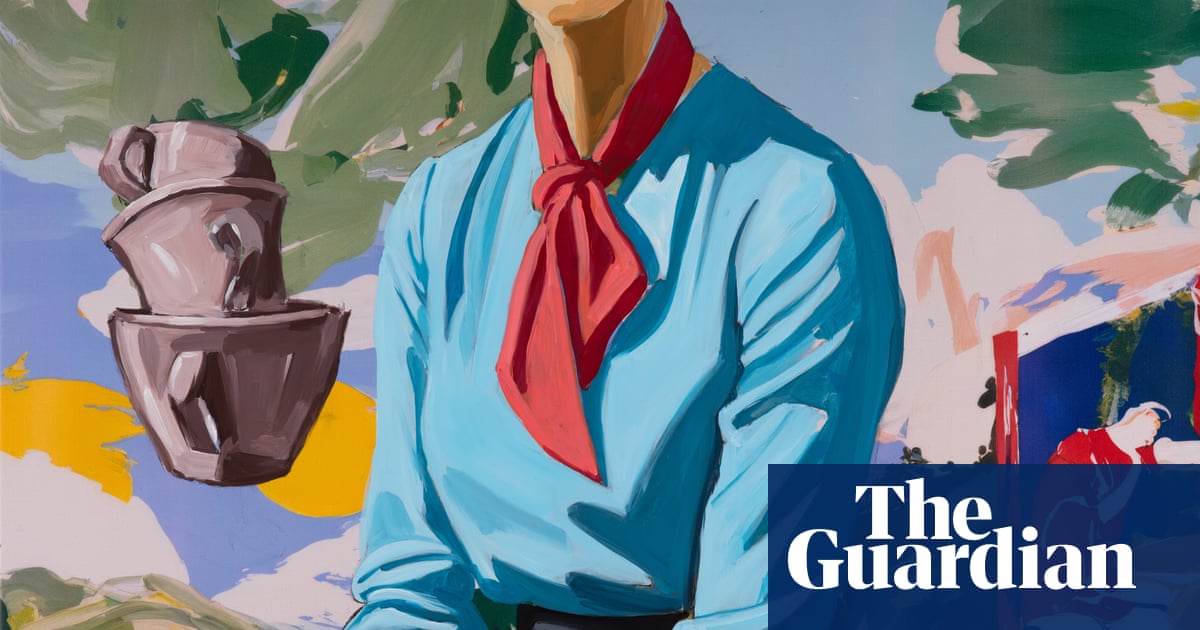
Salle told the opening that he trains the AI on his personal archive of paintings. The model, built almost exclusively from his own images, produces new compositions that the artist describes as “unexpected territories.” Those synthetic images are printed on linen canvas using archival UV printing, then overpainted by Salle with high‑contrast brushstrokes.
The process reverses the usual hierarchy of tools: AI deconstructs and recombines visual elements, while the painter re‑asserts control through manual intervention. Salle emphasizes that the machine is not a substitute for his hand but a “creative interlocutor” that destabilises his own language of painting.
By looping his historical motifs—such as the 1989‑91 Tapestry Paintings that already reinterpreted 16th‑century works—through the AI, Salle generates “all‑over phantasmagorical abstractions.” The resulting canvases juxtapose nudes, courtiers, fashion ads and still‑life objects in a single visual field, blurring temporal boundaries.
Critics see the exhibition as a test case for how artists might harness AI without relinquishing authorship. Salle argues that the technology’s value lies in its ability to deconstruct images, a process he likens to deconstructivist architecture or literature. The painter then uses that deconstruction to “unravel and recalibrate the logic of painting.”
The show marks a methodological shift for Salle, who began developing the personalized AI model between 2022 and 2026. Rather than delegating creative decisions to the algorithm, he treats it as a “junior creative partner” that remix‑s his visual vocabulary.
What to watch next: how other artists respond to Salle’s hybrid workflow and whether galleries will adopt AI‑assisted production as a standard practice.
Continue reading
More in this thread
Conversation
Reader notes
Loading comments...