Cuba denounces new U.S. sanctions as economic aggression
Cuba's foreign ministry calls the May 2026 US sanctions criminal measures aimed at starving its people, warning of broader economic fallout.
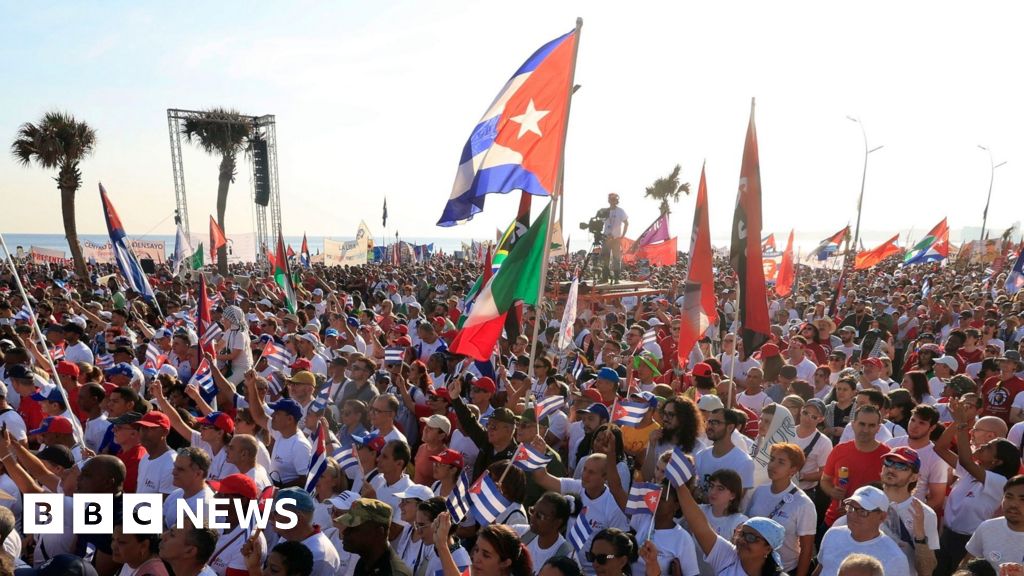
People march with Cuban flags in Havana on May Day.
TL;DR: Cuba’s foreign ministry condemns the May 1 executive order and the May 7 Treasury designation of two Cuban firms as criminal economic aggression intended to starve the population.
Context On May 1, 2026 the White House issued an executive order that intensifies the United States’ long‑standing embargo on Cuba. The order expands restrictions on trade, finance and investment, and threatens secondary sanctions on non‑U.S. entities that do business with Cuban interests. A week later the Treasury Department added the state‑run airline GAESA and mining company MoaNickel S.A. to the Specially Designated Nationals (SDN) List, marking the first direct coercive step under the new order.
Key Facts - Cuba’s Ministry of Foreign Affairs issued a communiqué on May 7 rejecting the executive order in the strongest terms, calling it an unprecedented tightening of the economic, commercial and financial blockade. - The ministry also condemned the Treasury’s decision to list GAESA and MoaNickel S.A. on the SDN List, labeling the move a criminal act. - In the same statement, Cuban officials warned that the measures aim to starve the Cuban population and provoke a national social, economic and political catastrophe. - The communiqué warned that secondary sanctions could affect foreign banks and companies even when their U.S. activities are unrelated to Cuba, further crippling the island’s already strained economy.
What It Means The United States is leveraging its financial system to pressure Cuba beyond the borders of the island, a tactic that could deter foreign investors and limit access to essential imports. By targeting GAESA, which operates the national airline, and MoaNickel, a key nickel producer, Washington is striking at sectors that generate foreign currency and employment. Cuba’s characterization of the actions as “economic aggression” reflects a broader diplomatic push to rally international opposition to the expanded embargo. The Cuban government has pledged to raise the issue at multilateral forums and to call on sovereign nations to reject what it calls illegal extraterritorial enforcement.
The next weeks will reveal whether the sanctions prompt any shift in Cuban policy or trigger a coordinated response from other countries wary of U.S. secondary sanctions. Watch for statements from the European Union, Latin American blocs, and any legal challenges filed in U.S. courts.
Continue reading
More in this thread
Trump Awards $6.9 M No‑Bid Contract to Firm Linked to His Golf Course for Lincoln Pool
Nadia Okafor
Tucker Carlson Turns Against Israel Policy, Fuels 2024 White House Talk
Nadia Okafor
UN Condemns Forced Exhumation of Palestinian Father by Israeli Settlers
Nadia Okafor
Conversation
Reader notes
Loading comments...