China's 2025 Space Surge: Record 92 Launches, 204-Day Crew Mission, and 16-Day Emergency Rescue Launch
China's space program recorded 92 orbital launches in 2025, a 35% increase, alongside a 204-day crew record and a 16-day emergency rescue mission.
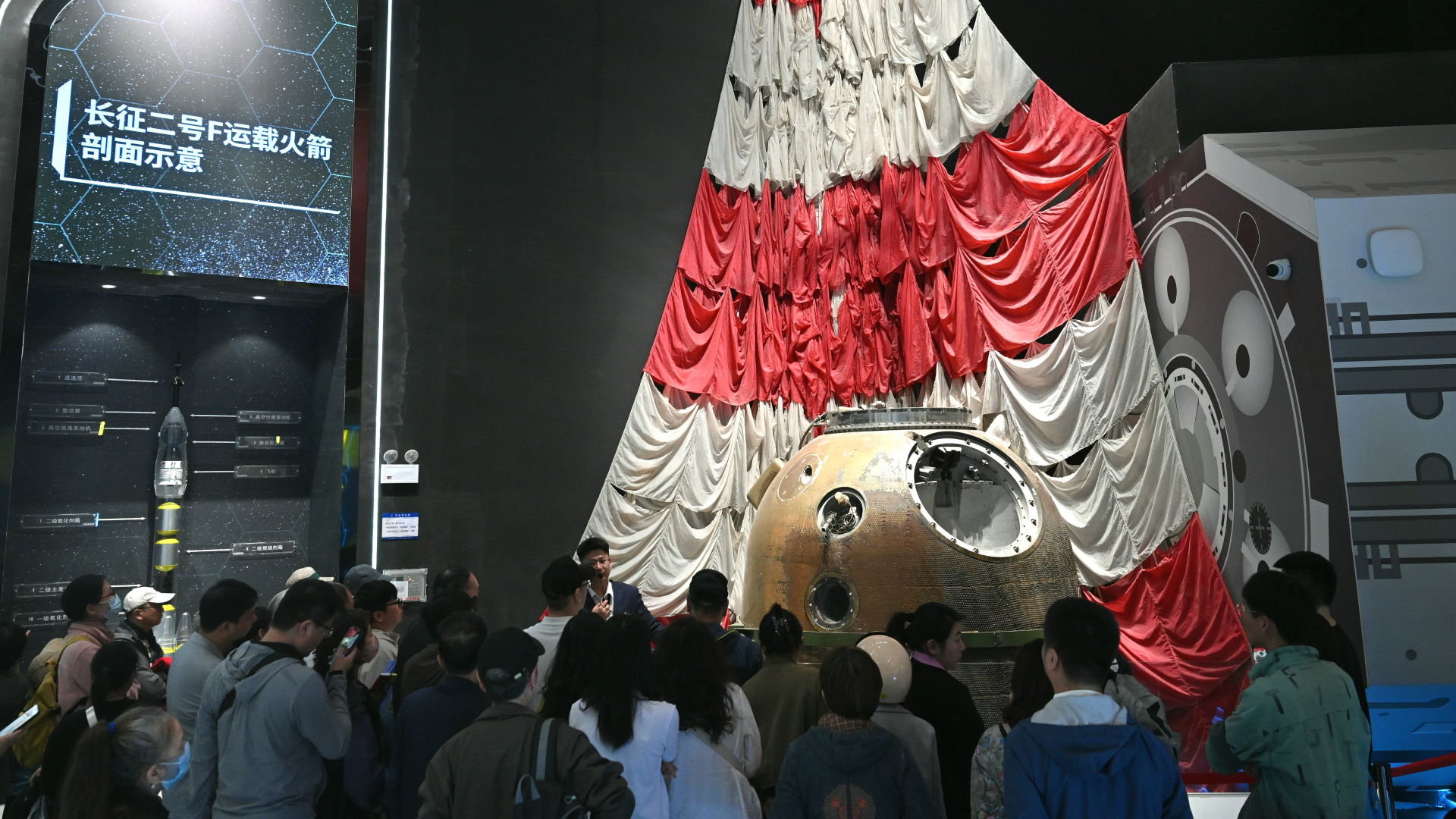
China's space program achieved a record 92 orbital launches in 2025, alongside a new 204-day crew duration record and a swift 16-day emergency rescue mission, marking significant advancements.
China's space program demonstrated accelerated expansion in 2025, achieving multiple operational and crewed mission milestones. This progression aligns with a long-term national strategy focused on advanced space infrastructure and human spaceflight capabilities. The nation prioritizes establishing extensive satellite constellations and preparing for future lunar missions.
The year 2025 saw China execute 92 orbital launches. This figure represents a 35% increase over the national record set in 2024. Most of these launches supported the deployment of low-Earth-orbit internet satellite mega-constellations, including projects like GuoWang and SpaceSail.
Crewed missions also established new benchmarks. The Shenzhou-20 crew completed a 204-day mission in orbit, setting a new record for the longest single Chinese crewed spaceflight.
An unprecedented operational event occurred when the Shenzhou-20 capsule was deemed unsafe for reentry due to a reported crack. In response, the China National Space Administration (CNSA) launched the Shenzhou-22 spacecraft within 16 days. This rapid deployment provided a necessary return vehicle for the stranded astronauts, demonstrating an enhanced level of operational responsiveness.
These advancements underscore China's accelerated efforts in space. The high launch cadence supports ambitious infrastructure projects, including large-scale internet satellite networks critical for future global communications. The record-setting crewed mission signals increased capability for long-duration human presence in space. Furthermore, the successful emergency launch highlights advanced operational flexibility and safety protocols, crucial for complex human spaceflight endeavors.
Beyond these immediate achievements, 2025 also saw progress in deep-space exploration and lunar ambitions. The Tianwen-2 mission launched in May, targeting asteroid sample collection by 2027 and a main-belt comet survey by 2034. Preparations for a crewed lunar landing by 2030 advanced with tests of the Mengzhou crewed spacecraft and the Lanyue lunar lander. These developments position China for a prominent role in future global space initiatives.
Observers will now monitor how these foundational advancements pave the way for China's planned Tianwen-3 Martian sample return mission in 2028 and its target of a crewed lunar landing by 2030.
Continue reading
More in this thread
DOE Unveils Interactive Map of 19 Geothermal Heat Pump Case Studies to Drive Adoption
Dr. Leo Tanaka
NASA’s 2026 Strategy Shifts LEO to Private Firms While Dreamers Set Deep‑Space Goals
Dr. Leo Tanaka
Germany Hits 55% Renewable Electricity Share as UN Urges Faster Fossil Fuel Exit
Dr. Leo Tanaka
Conversation
Reader notes
Loading comments...