China’s Welcomes Signal Preference for Putin Over Trump
China's differing receptions for Putin and Trump reveal a strategic tilt toward Moscow, highlighting Beijing's trust in Russia amid limited summit outcomes.
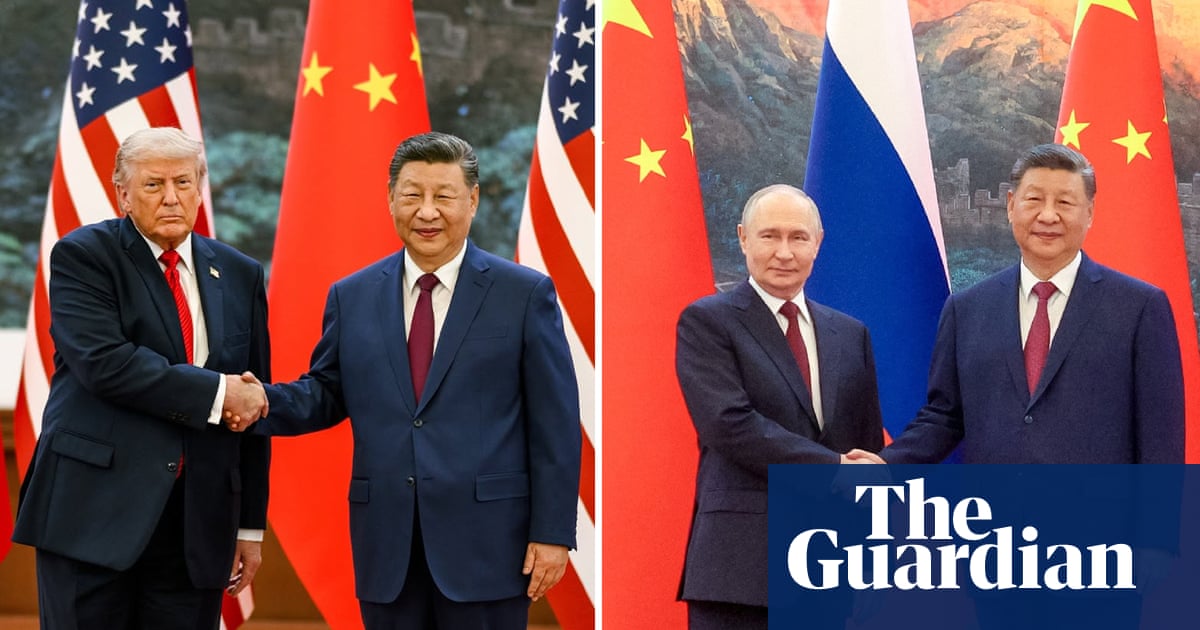
TL;DR: China greeted Vladimir Putin with a senior Politburo member while Donald Trump met only the vice‑president, underscoring Beijing’s view of Moscow as a trusted partner.
Context Beijing staged two high‑profile state visits within weeks, first hosting U.S. President Donald Trump and then Russian President Vladimir Putin. Both arrivals featured military bands, honour guards and flag‑waving crowds, a choreography that highlighted China’s capacity to entertain rival superpowers.
Key Facts - Trump arrived to a ceremony led by China’s vice‑president, a role that carries no real decision‑making power inside the Communist Party. - Putin was received by a sitting member of the Politburo, the party’s top decision‑making body, signalling a higher level of political trust. - Russian newspaper *Argumenty i Fakty* described Putin’s reception as that of “an ally and reliable partner,” while labeling Trump a “rival and competitor.” - Xi Jinping became the first Chinese leader to host a sitting U.S. president and a sitting Russian president in the same month, a diplomatic first for Beijing. - The summits produced limited concrete outcomes; the Trump‑Xi meeting yielded no breakthrough on Nvidia chip export bans or tariff disputes, and the Putin‑Xi talks ended without a specific timeline for the delayed Power of Siberia 2 gas pipeline.
What It Means The disparity in welcome ceremonies sends a clear diplomatic signal: Beijing regards Moscow as a more dependable pillar of its emerging non‑Western order. By assigning a Politburo member to greet Putin, China placed the Russian leader within its inner circle of trusted allies, whereas Trump’s meeting with the vice‑president kept the U.S. leader at a ceremonial distance. This preference aligns with Russia’s growing economic reliance on China amid Western sanctions and a stalled war in Ukraine. Energy cooperation, especially the long‑awaited gas pipeline that would shift Russian supplies from Europe to China, remains a strategic priority for Moscow, even if no firm dates were announced. For the United States, the subtle snub underscores the limits of its leverage over Beijing. While Trump’s visit allowed Xi to showcase his ability to host rival powers, the lack of substantive agreements suggests that China is not prepared to trade strategic concessions for short‑term diplomatic goodwill. Looking ahead, analysts will watch whether Beijing translates this symbolic favoritism into tangible policy—particularly in energy, technology and coordinated responses to U.S. actions in the Indo‑Pacific and the Middle East. The next major diplomatic event involving either the U.S. or Russia will test how far China is willing to let its strategic partnership with Moscow shape global alignments.
Continue reading
More in this thread
Conversation
Reader notes
Loading comments...