China’s 80% Oil Lifeline to Iran Drives Its Cautious Stance Amid Strait of Hormuz Closure
China's strategic neutrality unfolds as the Strait of Hormuz closes, impacting global oil markets and challenging its 80% reliance on Iran's oil exports.
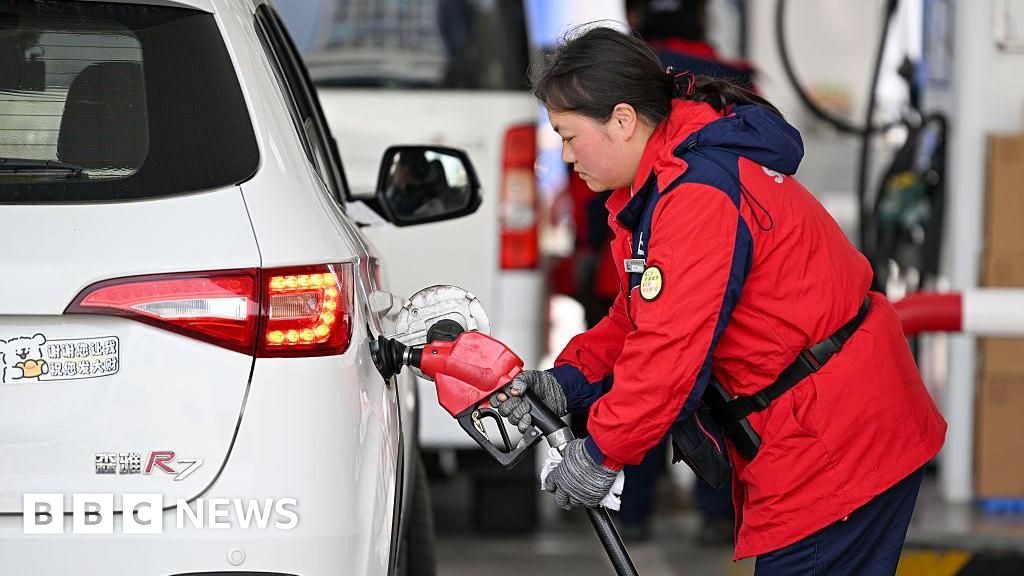
A worker refills a car at a gas station in Nanjing in eastern China's Jiangsu Province, Monday
**TL;DR** China maintains a diplomatic-only approach despite its 80% reliance on Iranian oil and the critical closure of the Strait of Hormuz, prioritizing economic stability over military entanglements.
The Middle East faces increased instability following the closure of the Strait of Hormuz, a critical global shipping lane only about 33 kilometers wide. This development escalates regional tensions and impacts international energy markets. China, a major global power, navigates these dynamics with a distinctive policy approach.
China imports approximately 80% of Iran’s oil exports, a substantial economic lifeline for Tehran and a key energy source for Beijing. This dependency underscores the deep economic ties between the two nations. However, China's foreign policy tradition emphasizes avoiding security commitments and troop deployments. Beijing focuses solely on diplomatic solutions and economic partnerships. This approach informs its actions as regional conflicts unfold.
China's measured response reflects a strategic calculation. While deeply invested in Iran's oil sector, it refrains from direct military involvement, adhering to its long-standing principle of non-interference. This strategy allows China to maintain flexibility in a volatile region where it also holds significant trade relations with other key players, such as Saudi Arabia and the United Arab Emirates. The current instability also provides China an opportunity to observe geopolitical shifts and the military capabilities of other nations, particularly the United States, without direct engagement.
China's careful balancing act aims to protect its energy interests while avoiding costly military entanglements that could disrupt its broader economic objectives. The nation prioritizes its role as a potential neutral party or mediator, which could offer diplomatic leverage in future negotiations. This stance allows China to potentially strengthen its regional influence without committing military resources.
Watch for China's continued diplomatic efforts and any shifts in its economic strategies as the situation in the Strait of Hormuz evolves.
Continue reading
More in this thread
Conversation
Reader notes
Loading comments...