China's economy posts 5% growth amid Trump tariffs, yet Iran war drives costs up 20% and EV exports surge 140%
China reports 5% GDP growth amid past tariffs, while the Middle East conflict elevates costs by 20% for some traders. Electric vehicle exports soared 140% in March.
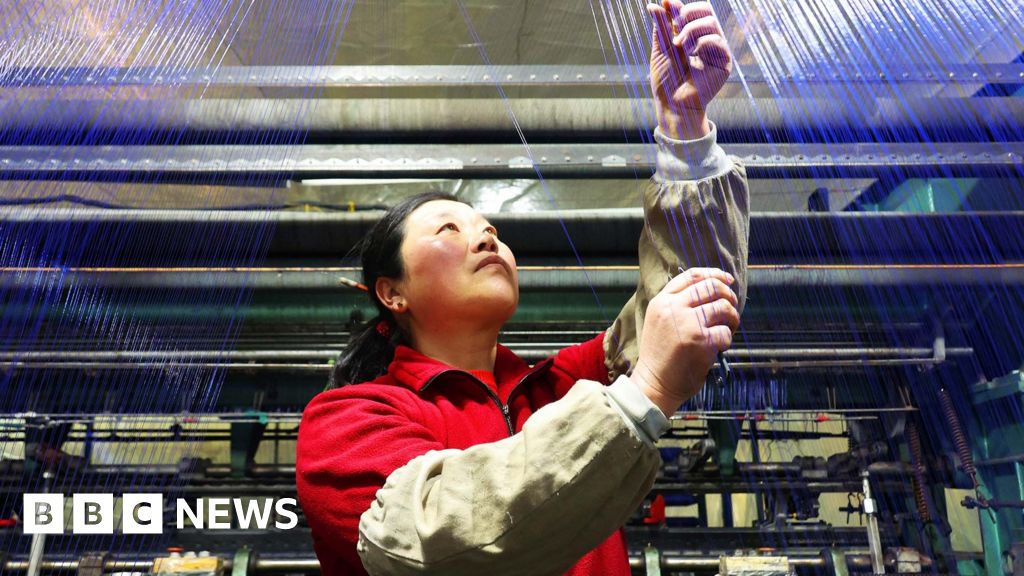
A worker monitors production of yarns at a factory in Suzhou in Eastern China, Januray 2026
TL;DR
China's economy posted approximately 5 percent GDP growth, yet Middle East conflict now drives a 20 percent cost increase for some traders. Simultaneously, electric vehicle exports surged 140 percent in March.
China's economy demonstrated resilience against previous trade tariffs, maintaining growth across its diverse manufacturing base. This performance occurred amidst ongoing shifts in global supply chains and increasing international pressures. The nation's factories continue to adapt, pivoting towards new technologies and export markets.
The Chinese economy, measured by its Gross Domestic Product (GDP), grew by approximately 5 percent. This expansion took place despite prior tariffs on Chinese goods. However, global events now introduce new economic pressures; some traders report a 20 percent increase in costs, attributing this rise to the conflict in the Middle East. Such cost escalations impact raw material procurement and production lines, particularly for industries reliant on petrochemicals for manufacturing.
Amid these challenges, China's electric vehicle (EV) sector shows notable strength in exports. In March, Chinese manufacturers exported 350,000 EVs. This figure represents a 30 percent increase from February's exports and a significant 140 percent surge compared to March of the previous year. These vehicles form a key part of China's shifting export focus.
The approximately 5 percent GDP growth highlights China's capacity to absorb external economic pressures from trade disputes. However, the reported 20 percent increase in operating costs, linked to the Middle East conflict, signals new challenges for manufacturers. This rise often translates to higher prices for consumers or reduced profit margins for businesses operating on thin margins. The Strait of Hormuz, a critical shipping lane, faces disruptions, affecting the cost and availability of oil-derived materials essential for many industries.
The substantial 140 percent growth in EV exports demonstrates a strategic pivot within China's industrial strategy. This surge points to China's increasing role in advanced technology manufacturing and its efforts to diversify export markets beyond traditional goods. This sector's strong performance provides a counterpoint to rising material costs elsewhere in the economy, offering a significant avenue for economic expansion.
Future observations will focus on how China sustains its economic growth, manages the impact of global supply chain disruptions on manufacturing costs, and expands its high-tech export sectors.
Continue reading
More in this thread
AI Adoption Doubles to 12.2% of Canadian Firms in 2025, But Productivity Gains Disappear When Complementary Skills Are Accounted For
Elena Voss
UK Policy Shift Halts Renewable Trusts' Recovery Despite Power Price Surge
Elena Voss
AI Adoption Doubles in Canada but Productivity Gains Fade Without Complementary Investments
Elena Voss
Conversation
Reader notes
Loading comments...