China’s 5,000‑Solar Donation Powers Cuban Vital Centers Amid Energy Crisis
China’s donation of 5,000 off‑grid 2‑kW solar systems supports Cuban maternity homes, clinics and banks; a Canadian project in Holguín is 60% installed.
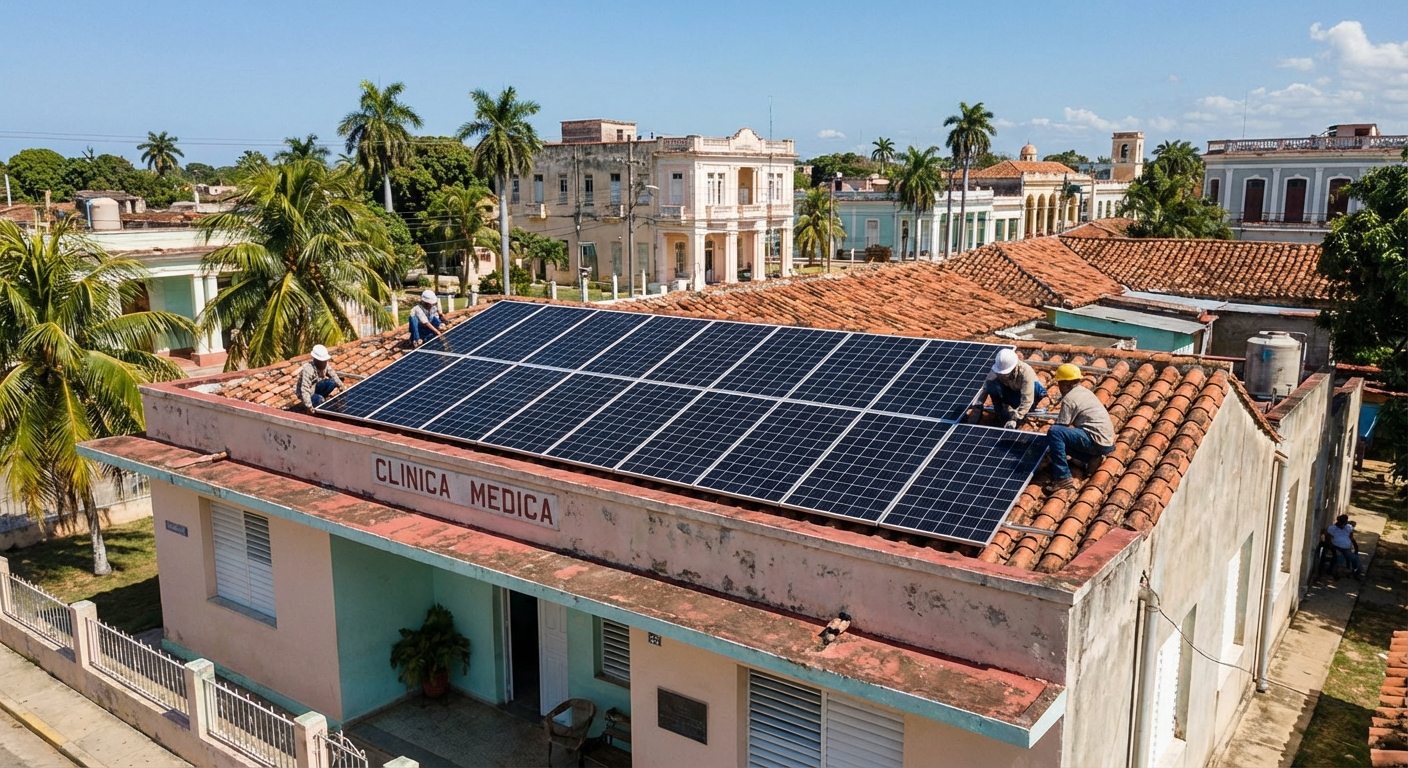
Cuban government begins deploying 5,000 photovoltaic systems donated by China in health centers and maternity homes to mitigate blackout impacts.
TL;DR: China donated 5,000 two‑kilowatt solar photovoltaic systems to Cuba, allocating 2,671 for vital municipal centers and the rest for isolated homes; a Canadian‑funded effort in Holguín has already installed 60% of its 502 units.
Context Cuba’s National Electric Union (UNE) is rolling out an off‑grid solar program to counteract a prolonged energy crisis that has left hospitals, banks and communication hubs vulnerable to sudden power cuts. The systems are standalone, meaning they store energy in batteries and do not rely on the national grid, allowing facilities to stay online during blackouts.
Key Facts The Chinese donation comprises 5,000 units, each rated at 2 kW. Elena Ortiz Fernández, head of the installation project, said 2,671 of those units will go to vital centers in every municipality—about 53 % of the total. These centers include maternity homes, nursing homes, polyclinics, funeral homes, bank branches, municipal radio stations and ETECSA communications facilities. The remaining 2,329 units will serve isolated homes, many of which have never had electricity or rely on costly, scarce fuel for generators.
A separate Canada‑backed initiative in Holguín aims to place 502 two‑kilowatt systems for off‑grid residences. Ortiz Fernández reported that 60 % of that target—roughly 301 systems—have already been installed, with work continuing to reach the remaining 40 %.
What It Means By providing independent power, the solar arrays help maintain vaccinations, elder care, banking transactions and radio broadcasts during outages, directly supporting public health and economic activity. Officials note the goal is not full self‑sufficiency but “energy survival” for essential services, which could reduce pressure on fuel supplies and limit community migration driven by lack of basic amenities.
The projects also generate data on real‑world performance of off‑grid PV in tropical climates, offering lessons for similar islands facing fuel insecurity.
What to watch next Observers should track the completion rate of the Cuban municipal rollout, the fuel‑savings impact on the national grid, and any expansion plans for additional solar or hybrid systems in other provinces.
Continue reading
More in this thread
Outdated Space Treaties Threaten to Spark Mars Resource Conflicts
Dr. Leo Tanaka
Renewables Claim 92% of New U.S. Power Plant Builds in 2025, Yet Supply Only a Tenth of Electricity
Dr. Leo Tanaka
Google’s UK AI datacentres misstate emissions by factor of five
Dr. Leo Tanaka
Conversation
Reader notes
Loading comments...