Chile's Free‑Trade Zone Drives Illegal Dumping of 39,000 Tonnes of Used Clothes in Atacama Desert
Chile's Iquique free-trade zone drives 123,000 tonnes of used clothing imports annually, but 39,000 tonnes end up illegally dumped in the Atacama Desert. New solutions emerge.
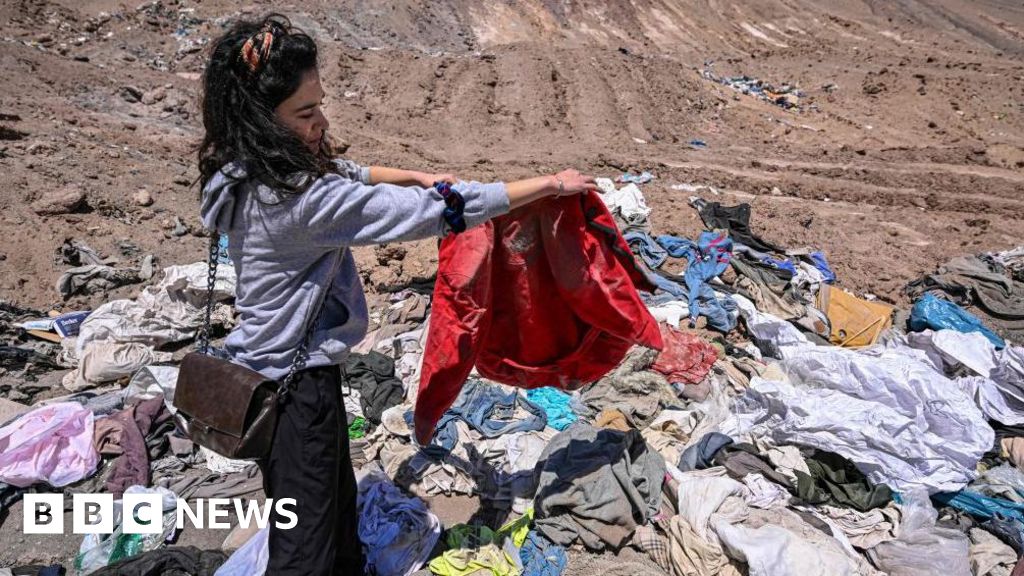
A woman holding up clothing, a red coat, that has been dumped in a desert in northern Chile
**TL;DR** Chile's Iquique free-trade zone drives the annual import of 123,000 tonnes of used clothing. However, an estimated 39,000 tonnes of these garments are illegally dumped in the Atacama Desert each year, posing environmental and logistical challenges.
**Context** Chile's northern Iquique Free Trade Zone (Zofri), established in 1975, allows businesses to import, store, and sell goods without customs duties or VAT. This economic stimulant made used clothing a major import, arriving baled in shipping containers from the US, Canada, Europe, and Asia. Zofri's general manager, Felipe González, highlights the clothing import sector's role as a significant employer for local women in the region, providing accessible work in garment processing and categorization.
**Key Facts** Chile imports approximately 123,000 tonnes of used clothing annually, much of which passes through Zofri. The high volume of imports leads to a substantial amount of unsold items. These garments cannot enter local landfills, which are designated only for household waste. Consequently, an estimated 39,000 tonnes of used clothing are illegally dumped in the surrounding Atacama Desert each year, creating vast piles of textile waste.
**What It Means** This illegal dumping creates a substantial environmental burden on the arid Atacama Desert. Local authorities in areas like Alto Hospicio face significant challenges monitoring and enforcing regulations against the widespread discarding of commercial textile waste across vast, easily accessible desert landscapes. In response, private initiatives are emerging; for example, a new facility is under construction to process unwanted clothing. This factory aims to transform discarded textiles into fibers and felt, intended for use in products such as mattresses, furniture, and insulation, processing an estimated 20 tonnes daily. The long-term impact of these new processing facilities on reducing illegal dumping and managing textile waste across Chile remains to be seen.
Conversation
Reader notes
Loading comments...