Chief Rabbis' Decades-Long Secret Diplomacy with US Presidents Revealed
New exhibition documents decades of previously unknown diplomatic engagement between Israel's chief rabbis and U.S. presidents, shaping U.S. policy toward the Jewish people.
TL;DR
New exhibition documents reveal a previously unknown history of direct diplomatic engagement between Israel's chief rabbis and U.S. presidents. These interactions spanned decades, influencing U.S. policy toward the Jewish people and later the State of Israel.
An exhibition in Jerusalem has brought to light a significant but largely unrecorded chapter in U.S.-Israeli relations. This collection of documents from U.S. presidential archives details how chief rabbis conducted quiet diplomacy with American leaders from the 1920s to the 1990s. Their efforts aimed to secure support for the Jewish people and, after 1948, for the nascent Jewish state.
In 1924, Rabbi Abraham Isaac Kook, then chief rabbi of Mandatory Palestine, met U.S. President Calvin Coolidge. President Coolidge pledged U.S. government assistance in establishing a Jewish national home in Palestine, marking an early high-level commitment. This interaction set a precedent for direct engagement between religious leaders and the American executive branch.
Decades later, during World War II, Rabbi Isaac Halevi Herzog engaged U.S. President Franklin Delano Roosevelt on critical humanitarian issues. On April 23, 1941, Rabbi Herzog wrote to President Roosevelt, urging assistance for European Jewry amidst the escalating Holocaust. His communication underscored the urgency of the situation for millions facing persecution.
This advocacy continued, leading to tangible outcomes. On February 2, 1944, Rabbi Herzog sent a telegram to President Roosevelt, extending blessings to the U.S. nation. This message specifically recognized the establishment of the War Refugee Board, a U.S. government agency created to rescue European Jewry survivors. These documented exchanges highlight the rabbis' role in shaping American responses to global Jewish crises.
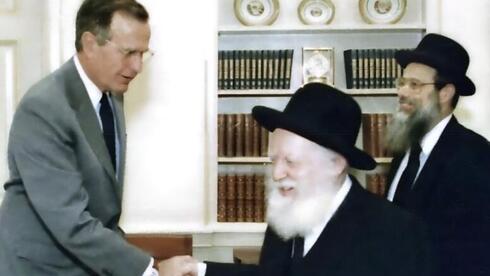
Further diplomatic efforts continued through the decades. Rabbi Herzog, for example, later met with President Harry Truman, appreciating his support for the Jewish people around the United Nations Partition Plan in 1947. These meetings often involved discussions ranging from biblical verses to pressing geopolitical issues. The final interaction featured in the current exhibition occurred in March 1992, when Chief Rabbi Avraham Shapira met President George H.W. Bush, thanking him for efforts in rescuing Soviet Jews.
The revealed documents offer a clearer understanding of the nuanced, informal channels that influenced U.S. foreign policy over many decades. This sustained engagement by religious leaders highlights a unique aspect of U.S.-Jewish relations, extending beyond official state-to-state ties. The records illustrate a consistent, proactive effort by the Chief Rabbinate to advocate for the Jewish people on a global stage. Future analysis will likely explore the full impact of these private diplomatic actions on historical events and ongoing bilateral relationships.
Continue reading
More in this thread
Tinubu Government Begins Media Tour to Detail Sectoral Progress
Nadia Okafor
Tinubu’s Team Begins Nationwide Tour to Showcase Health, Education, and Infrastructure Gains
Nadia Okafor
Nigerian Court Fast-Tracks Trial of Six Suspects in Alleged Coup Plot Against Tinubu
Nadia Okafor
Conversation
Reader notes
Loading comments...