CFTC Sues Wisconsin Over Prediction‑Market Jurisdiction After State Targets Major Platforms
The CFTC filed a lawsuit on April 28, 2026, to assert federal control over prediction markets after Wisconsin sued Kalshi, Polymarket, Crypto.com, Robinhood, and Coinbase.
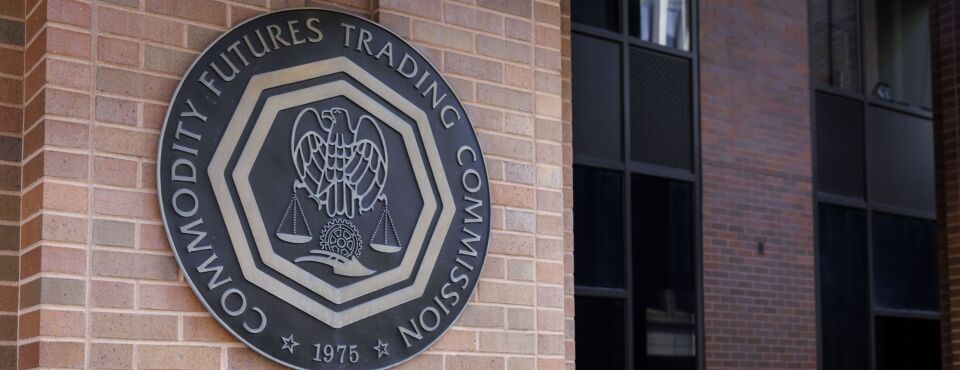
*TL;DR: The Commodity Futures Trading Commission sued Wisconsin on April 28, 2026, to preserve federal jurisdiction over prediction markets after the state filed civil suits against five major crypto platforms.*
Context The Commodity Futures Trading Commission (CFTC) regulates U.S. derivatives, including futures contracts tied to commodities and financial assets. Prediction markets—platforms where users bet on outcomes such as election results—have migrated to blockchain, creating tokenized contracts that resemble derivatives. Wisconsin recently launched civil actions against Kalshi, Polymarket, Crypto.com, Robinhood and Coinbase, alleging violations of state gambling and securities statutes.
Key Facts - On April 28, 2026, the CFTC filed a lawsuit against the State of Wisconsin, asserting that only the federal agency can regulate prediction‑market derivatives. - The CFTC’s filing directly references Wisconsin’s suits, stating the state’s actions “interfere with the Commission’s exclusive authority.” - Kalshi (ticker KALSH), a regulated U.S. prediction market, saw its share price rise 4.2% to $12.45 after the filing, pushing its market cap to roughly $1.1 billion. - Polymarket, a decentralized platform, does not trade publicly but its native token POLY climbed 7% to $0.68, reaching a market cap near $420 million. - Crypto.com (ticker MCO) fell 2.3% to $0.92, trimming its market cap by $150 million to $4.3 billion. - Robinhood (ticker HOOD) dropped 1.8% to $9.73, leaving a market cap of $12.6 billion. - Coinbase (ticker COIN) slipped 2.1% to $61.40, shaving $1.2 billion off its $58 billion market cap. - The CFTC emphasizes that tokenized prediction contracts fall under its definition of “commodity derivatives,” a classification that would subject them to registration, reporting and margin rules.
What It Means The lawsuit signals the CFTC’s intent to keep crypto‑related derivatives within a single regulatory framework, limiting state‑level fragmentation. If the court upholds the CFTC’s claim, platforms may need to register as futures exchanges or clear their contracts through federally approved clearinghouses. That could raise compliance costs, potentially slowing product rollout and affecting liquidity on tokenized markets.
For investors, the immediate market reaction shows heightened sensitivity: regulated players like Kalshi gained, while broader crypto‑focused firms fell modestly. The outcome will shape where new prediction‑market products launch—whether under federal oversight or in a patchwork of state regimes.
Looking ahead, watch the district court’s ruling timeline and any subsequent CFTC guidance on tokenized derivatives, as both will dictate the regulatory landscape for prediction markets and related crypto assets.
Continue reading
More in this thread
Arcellx CFO Sells 72,000 Shares in Gilead Merger Tender Offer at $115 per Share
David Amara
Rare Earths Americas Prices IPO at $17‑$19, GMR Solutions Files, Barrick Prepares North American Spin‑Off
David Amara
US Army Sergeant Pleads Not Guilty to First Insider Trading Case Involving Prediction Market
David Amara
Conversation
Reader notes
Loading comments...