CFOs Overlook Integration Budgets, Leaving Millions in Synergy Value on the Table
Analysis of why CFOs fund deal fees but delay integration budgets, risking lost synergies, with Nigerian market data and practical metrics.
TL;DR
CFOs routinely approve tens of millions in advisory fees for large acquisitions but delay setting integration budgets, which can erase a quarter of expected synergies and cost millions in lost value.
In a $2 billion strategic acquisition, advisory fees for bankers, lawyers, tax advisers and regulators often run into the tens of millions, approved as a single line item. By contrast, the first‑year integration budget — the money that actually determines whether the deal delivers its announced synergies — is frequently a small fraction of that amount, assembled piecemeal from functional budgets and rarely approved as a single commitment. This pattern was evident in the March 2024 deal where Nigerian brewer Nigerian Breweries PLC (NGX: NB, market cap ≈ ₦1.8 trillion) agreed to a $1.9 billion takeover of a rival malt producer; its share price rose 2.8% on the announcement, yet integration funding remained undefined.
Fact 1 shows that advisory fees for a $2 billion acquisition can reach tens of millions, while the first‑year integration budget is often only a small fraction of that amount. Fact 2 captures the common CFO refrain: “We’ll figure that out after close.” Fact 3 quantifies the upside of acting early: accelerating synergy capture by 90 days in a $500 million annual synergy deal can yield about a quarter of the annual benefit, outweighing the cost of a low‑single‑digit‑million clean‑room investment.
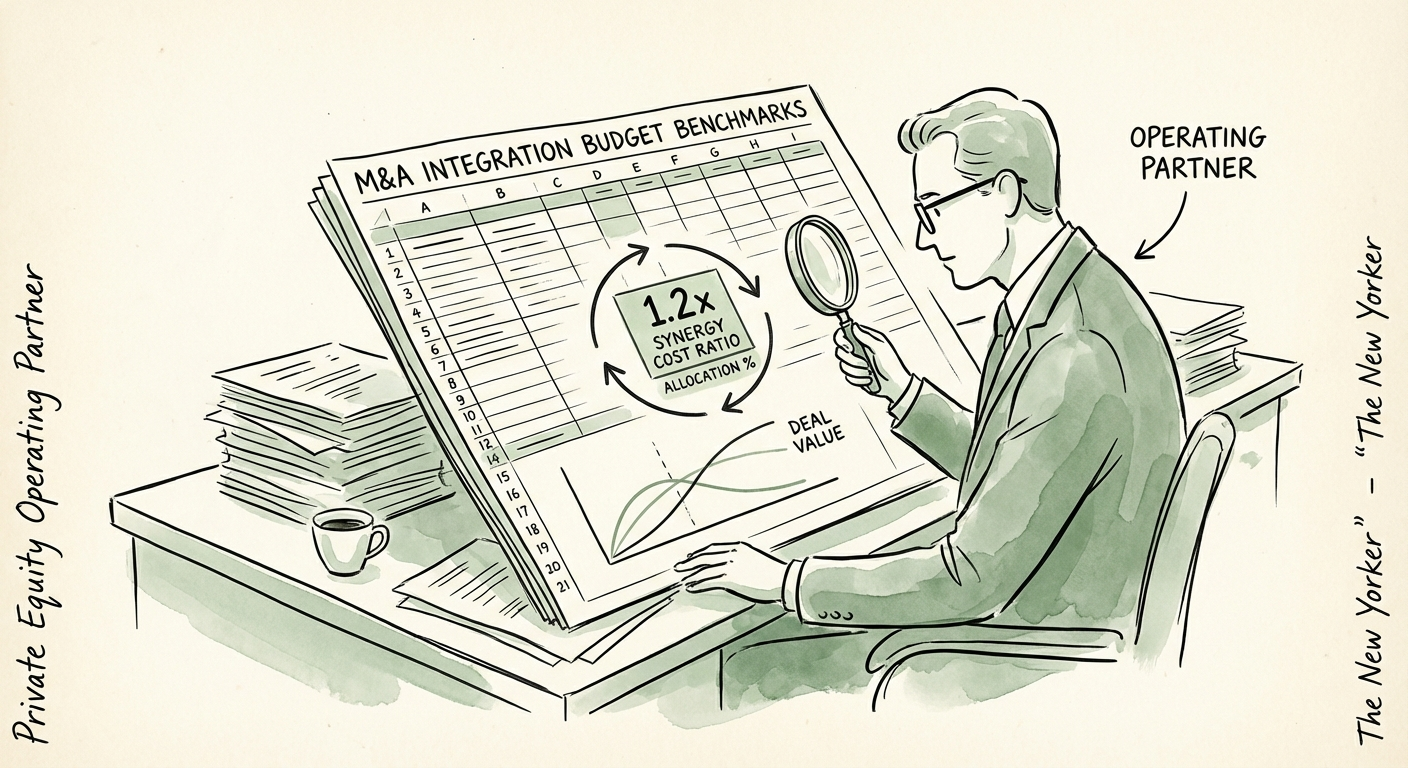
The gap persists because integration spend is dispersed across HR, IT and commercial functions, with no single owner sizing the total. Without a simple metric, CFOs lack a benchmark to anchor the conversation. An internal measure — the integration investment ratio (first‑year integration spend divided by announced run‑rate synergy value) — can start the discussion before closing, ensuring funds are allocated when they can shift the trajectory.
What to watch next: whether more CFOs adopt the integration investment ratio as a gate‑keeping tool in upcoming deals and how that influences post‑close synergy realization.
Continue reading
More in this thread
Bhutan’s Gelephu Mindfulness City Launches Fast‑Track Crypto Licensing with Potential Zero Tax and Hydropower Power
David Amara
Bhutan Offers Fast‑Track Crypto Licensing With 0% Tax
David Amara
Houston Inflation at 3.8% as Producer Prices Jump 6%, Budgets Feel Pressure
David Amara
Conversation
Reader notes
Loading comments...