Canvas Ransom Attack Locks UNC Students Out on Final Exam Day
Hackers from ShinyHunters seized UNC's Canvas platform on finals day, demanding ransom and exposing student data. Learn the impact and mitigations.
UNC students express concern about Canvas hack on the eve of graduation
TL;DR
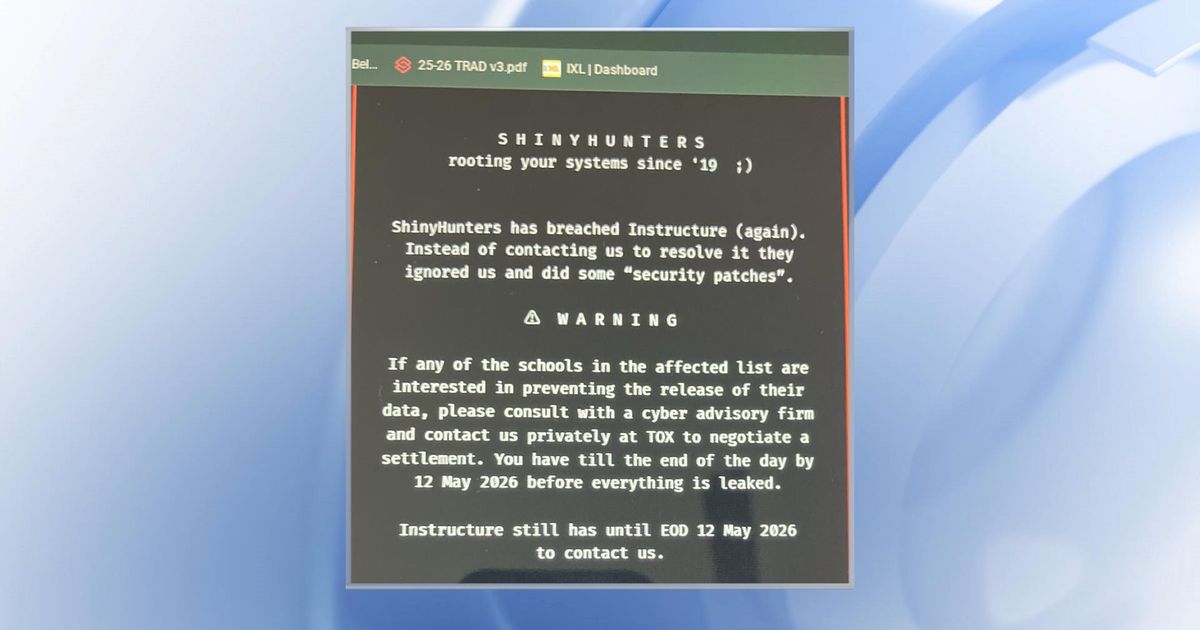
On the last day of UNC‑Chapel Hill finals, the Canvas learning platform went offline after the ShinyHunters hacking group demanded a ransom, exposing student names, emails, IDs and messages.
Context The Canvas system, operated by Instructure, serves as the primary hub for assignment submission, grade posting and teacher‑student communication at UNC‑Chapel Hill. On Thursday afternoon, as students prepared for final exams, the platform entered maintenance mode and remained inaccessible for several hours.
Key Facts - The outage began after a ransom note was posted by the ShinyHunters group, which claimed responsibility for a broader breach of Instructure’s services. - Instructure confirmed that attackers accessed personal identifiers (names, email addresses, student IDs) and internal messages. - The breach was first detected on April 29, but the public impact surfaced when Canvas went down on the final exam day. - UNC officials instructed faculty to download grades, assignments and rubrics as a precaution against further downtime. - Students expressed anxiety over missing grades that affect GPA and graduation eligibility. Senior Mikayla Crump noted, “We use Canvas for everything. It’s where we submit everything, where our teachers communicate with us.” - By Thursday night, most users regained access as Canvas was restored from maintenance mode.
What It Means The incident highlights the vulnerability of cloud‑based education platforms to ransomware and data‑exfiltration attacks. Exposure of student identifiers can facilitate phishing or credential‑stuffing campaigns targeting the university community. The timing—coinciding with final exams—amplified operational disruption and student stress, prompting other institutions to review contingency plans for critical academic systems.
Mitigations - Patch Management: Apply the latest security patches for the underlying web application framework and any third‑party libraries referenced in Canvas. - Network Segmentation: Isolate learning management system traffic from other campus networks to limit lateral movement. - Multi‑Factor Authentication (MFA): Enforce MFA for all administrative and faculty accounts to reduce credential compromise risk. - Monitoring: Deploy detection signatures for MITRE ATT&CK techniques T1078 (Valid Accounts) and T1486 (Data Encrypted for Impact) to alert on suspicious login patterns and ransomware behavior. - Backup Strategy: Maintain immutable, offline backups of course data and gradebooks to enable rapid restoration without paying ransom. - User Awareness: Conduct targeted phishing simulations and training for students and staff, emphasizing verification of unexpected communications about grades or system status.
What to Watch Next Watch for any follow‑up disclosures from Instructure regarding the scope of the breach, potential ransom negotiations, and whether law enforcement identifies the actors behind ShinyHunters.
Continue reading
More in this thread
Union Bank and Trust Settles MOVEit Breach Claims for $2.39 Million
Peter Olaleru
New Hanover County Schools Canvas Breach Exposes Student Names and IDs, Statewide Access Suspended
Peter Olaleru
Union Bank Settles MOVEit Breach for $2.39 M, Offers Up to $12,500 per Victim
Peter Olaleru
Conversation
Reader notes
Loading comments...