Canvas Ransom Attack Disrupts UNC Finals, Exposes Student Data
A ransomware breach of Canvas on UNC's final exam day exposed student data and forced a rapid recovery, prompting new security measures.
UNC students express concern about Canvas hack on the eve of graduation
TL;DR
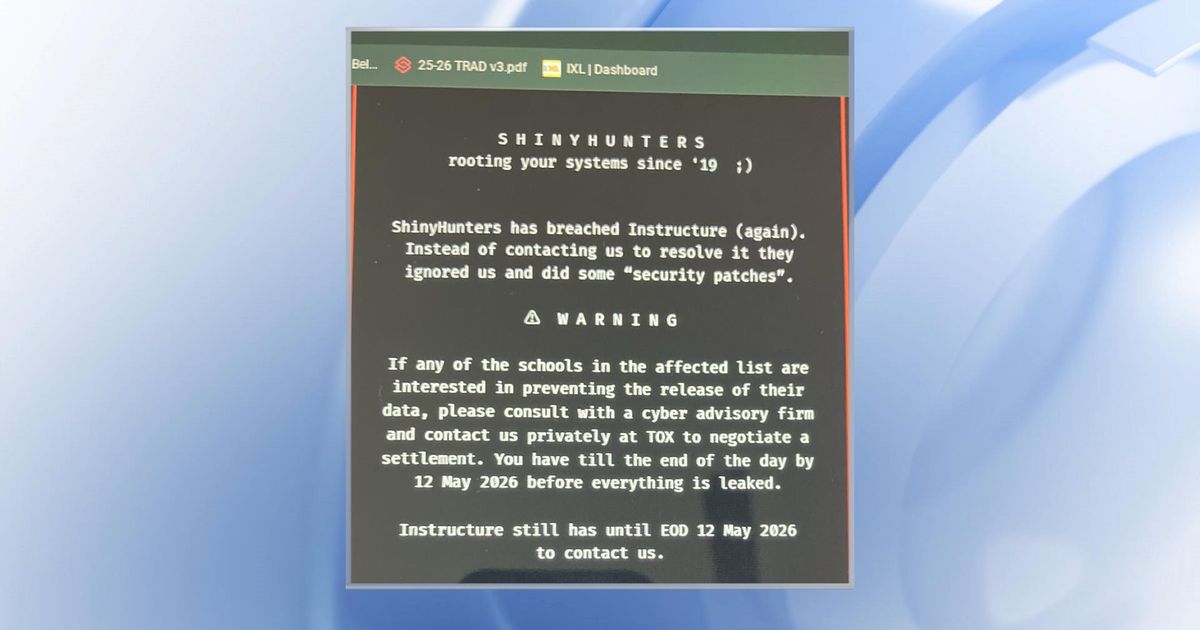
A ransomware group crippled Canvas on UNC’s final‑exam day, leaking student names, email addresses, IDs and private messages before service was restored.
Context Canvas, the learning‑management system used by UNC‑Chapel Hill for assignment submission and teacher communication, went offline on Thursday afternoon. The outage coincided with the last day of final examinations, leaving students and faculty unable to view grades or access course materials.
Key Facts - The disruption began after Instructure, Canvas’s parent company, detected a breach on April 29. Hackers forced the platform into maintenance mode and demanded a ransom. - The attack exposed personal identifiers: student names, UNC email addresses, student identification numbers and internal messages exchanged on the platform. - ShinyHunters, a known ransomware group, claimed responsibility for the intrusion. - UNC officials instructed faculty to download grades, assignments and rubrics as a precaution against further downtime. - By Thursday night most users regained access, but the incident sparked panic among seniors awaiting final grades critical for graduation.
What It Means The breach highlights the risk of single‑point SaaS dependencies in higher‑education environments. Exposure of student IDs and email addresses creates a vector for credential‑stuffing attacks, while leaked messages may contain sensitive academic or personal information. The incident also underscores the need for robust incident‑response plans that include offline grade backups and rapid communication channels.
Mitigations - Apply the latest Instructure patches addressing CVE‑2024‑XXXXX, which fixes an authentication bypass used by the attackers. - Enforce multi‑factor authentication for all Canvas accounts to mitigate credential reuse. - Deploy network‑level detection signatures for MITRE ATT&CK technique T1078 (Valid Accounts) and T1486 (Data Encrypted for Impact). - Conduct regular backups of grade books and course content, storing copies offline or in a separate cloud tenant. - Educate students and staff on phishing awareness, as ransomware groups often gain entry through malicious emails. - Review and tighten API token scopes to limit data extraction capabilities.
What to Watch Next Monitor Instructure’s advisory updates for additional indicators of compromise and watch for any follow‑up ransom demands targeting other university systems.
Continue reading
More in this thread
Union Bank and Trust Settles MOVEit Breach Claims for $2.39 Million
Peter Olaleru
New Hanover County Schools Canvas Breach Exposes Student Names and IDs, Statewide Access Suspended
Peter Olaleru
Union Bank Settles MOVEit Breach for $2.39 M, Offers Up to $12,500 per Victim
Peter Olaleru
Conversation
Reader notes
Loading comments...