Canvas Breach Exposes 275 Million Users, Prompting a Rethink of SaaS Security
Canvas LMS breach in May 2026 exposed 275 million user records, disrupted service for 8,800+ institutions, and sparked a sector‑wide SaaS security reassessment.
TL;DR
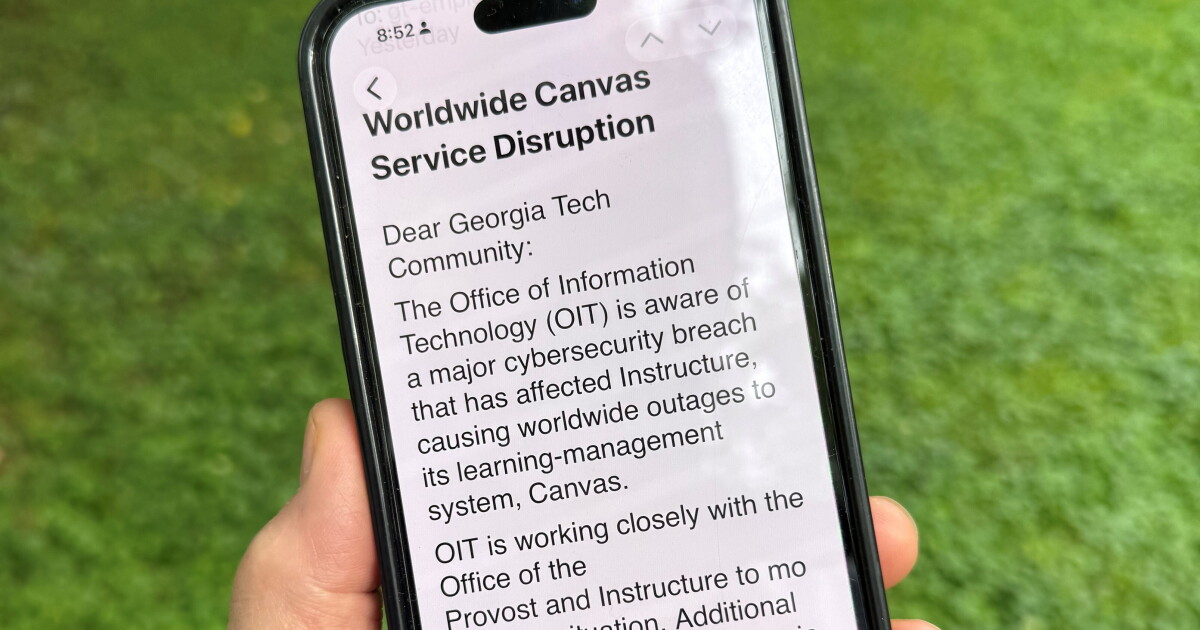
A May 2026 breach of the Canvas learning management system exposed 275 million user records and took services offline for days, affecting more than 8,800 educational institutions worldwide. Instructure said it reached an agreement with the attackers to destroy the compromised data, a move interpreted as a ransom payment, while self‑hosted instances remained unaffected.
Context Canvas, a widely used SaaS platform for course delivery, suffered a security incident in the first week of May 2026. Attackers gained access to the production environment, exfiltrated student records, and disrupted core functionality. Institutions that relied on the hosted service experienced outages that halted learning and assessments for several days. Organizations that ran their own instances of the open‑source software were not impacted.
Key Facts - 275 million users across 8,800+ institutions had personal data exposed. - Service disruption lasted multiple days until Instructure announced an agreement with the attackers to destroy the stolen data. - The agreement is widely interpreted as a ransom payment, though Instructure has not disclosed the amount. - Self‑hosted Canvas deployments reported no breach or service interruption. - Technical details such as the initial attack vector, exploited vulnerability, or threat actor attribution have not been publicly released; however, the scale suggests a sophisticated, likely credential‑based or supply‑chain technique aligned with MITRE ATT&CK T1078 (Valid Accounts) and T1195 (Supply Chain Compromise).
What It Means The incident underscores systemic risk when a single SaaS provider serves an entire sector. Customers should verify that providers enforce multi‑factor authentication, enforce least‑privilege API access, and maintain immutable backups isolated from the production network. Defenders should monitor for anomalous login patterns (MITRE ATT&CK T1078.003) and unexpected data exfiltration via DNS or HTTP (T1041). Applying the latest patches for known CVEs in the underlying framework and enabling detailed audit logging are immediate steps. Organizations using Canvas should review their incident‑response plans to include SaaS‑specific scenarios and consider hybrid architectures that retain critical data on‑premises or in a separate cloud.
Watch for post‑mortem disclosures from Instructure, any regulatory actions in the UK and Australia, and whether other large‑scale SaaS platforms face similar pressure to prove their security and resilience claims.
Continue reading
More in this thread
OnlyFans Denies 340‑Million‑User Data Leak as Seller Claims Data Compiled From Old Breaches
Peter Olaleru
OnlyFans Refutes Claims of 340 Million Record Sale
Peter Olaleru
Turkey’s Constitutional Court Annuls Digital Search Law, Sets 2027 Deadline for New Privacy Rules
Peter Olaleru
Conversation
Reader notes
Loading comments...