Blue Origin’s MK1 Lander Clears NASA Vacuum Test, Preps for South Pole Mission
Blue Origin's MK1 lander cleared NASA's thermal vacuum test and will deliver two payloads to the Moon's South Pole in 2026, supporting Artemis crewed lander development.
TL;DR
Blue Origin’s MK1 lander passed NASA’s Chamber A vacuum test and will carry two scientific payloads to the lunar South Pole in 2026, paving the way for the crew‑rated Blue Moon Mark 2.
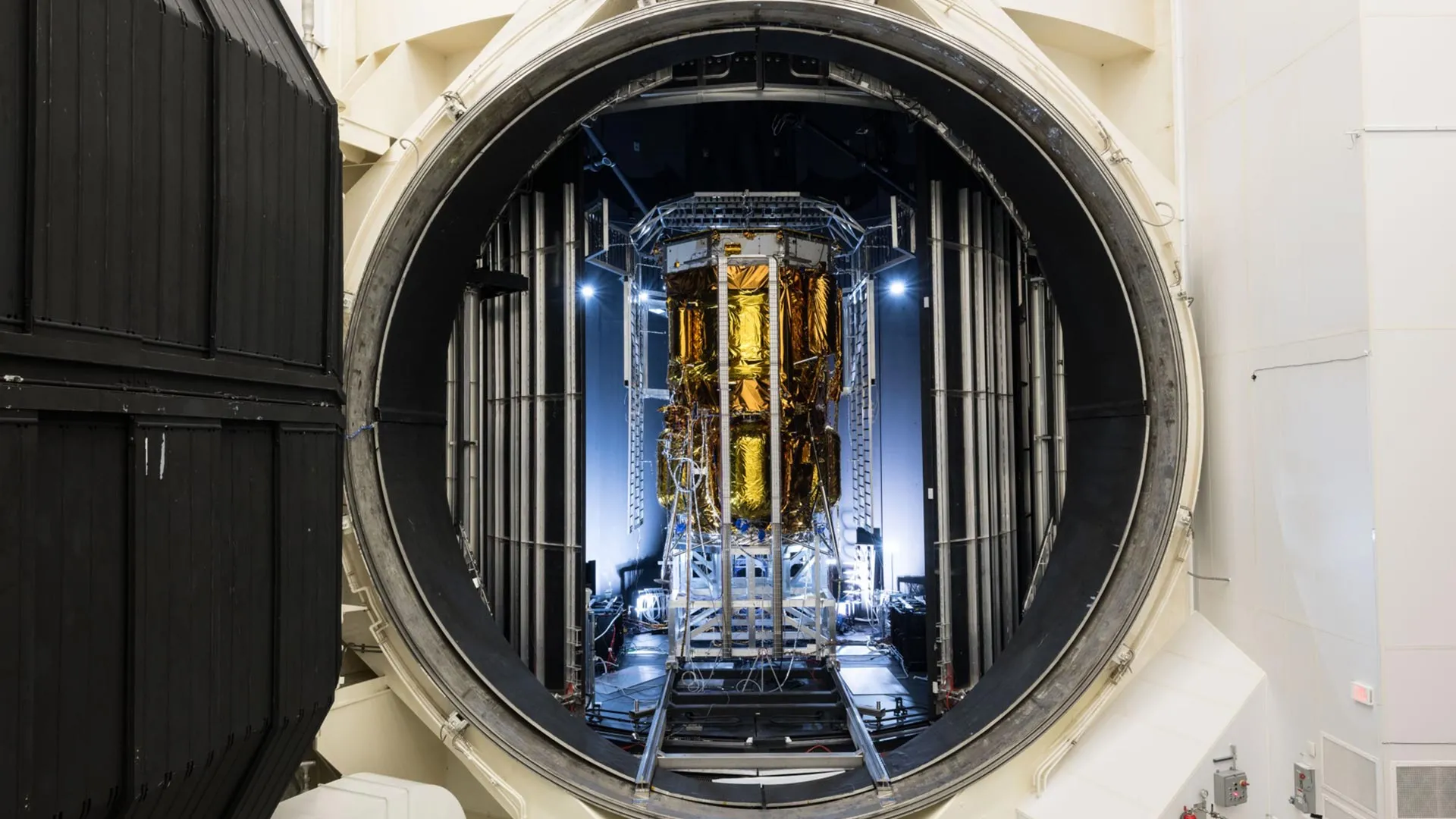
Context NASA’s Chamber A at Johnson Space Center replicates the near‑vacuum and temperature extremes of space. Engineers used the facility to evaluate structural integrity and thermal performance of the MK1 “Endurance” lander before its first flight.
Key Facts - The MK1 lander completed a full thermal‑vacuum cycle in Chamber A, confirming it can survive the harsh environment of lunar descent. - In 2026 the lander will deliver two NASA payloads: a stereo camera system designed to record how rocket plumes interact with the lunar surface, and a laser retro‑reflector array that will improve navigation by reflecting laser signals from orbiting spacecraft. - Data from the MK1 test feeds directly into development of the larger Blue Moon Mark 2 lander, which NASA plans to use for crewed Artemis missions to the Moon’s South Pole.
What It Means Successful vacuum testing reduces technical risk for the upcoming cargo flight and validates key systems such as cryogenic propulsion, autonomous guidance and precision landing. The stereo cameras will provide the first high‑resolution view of plume‑surface dynamics, informing future lander designs to minimize dust disturbance. The retro‑reflector will sharpen orbital navigation, a critical factor for safe crewed landings.
The MK1 mission is part of NASA’s Commercial Lunar Payload Services (CLPS) program, which contracts private firms to deliver science and technology experiments to the Moon. By leveraging CLPS, NASA expands lunar knowledge while accelerating the development of human‑rated landers.
Looking ahead, the performance of MK1 will be a benchmark for the Blue Moon Mark 2. Watch for updates on the 2026 launch schedule and any additional payloads added to the mission as NASA refines its Artemis lunar landing architecture.
Continue reading
More in this thread
Conversation
Reader notes
Loading comments...