Bank of England Deputy Warns Global Stocks Due for Correction as Private Credit Swells to $2.5 Trillion
Bank of England Deputy Governor Sarah Breeden cautions that global stock markets face an expected correction, citing record high asset prices and $2.5 trillion in private credit.
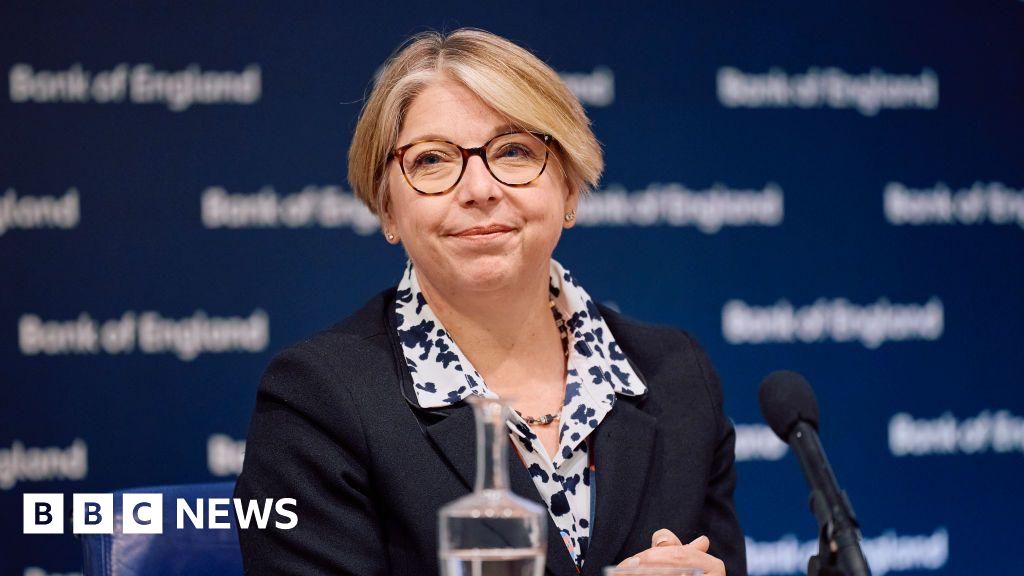
Sarah Breeden at a Bank of England meeting
Bank of England Deputy Governor Sarah Breeden indicates global stock markets face an expected correction, citing record high asset prices and the rapid expansion of untested private credit markets now valued at $2.5 trillion.
Sarah Breeden, Deputy Governor for Financial Stability at the Bank of England, issued a direct warning regarding global asset prices. She stated that despite significant risks in the economic landscape, asset valuations persist at record highs. This assessment signals an expectation of a market adjustment. Such forthright statements from a senior central bank official on market movements are infrequent and highlight a perceived disconnect.
Breeden specifically observed that "there's a lot of risk out there and yet asset prices are at all-time highs." This situation suggests a gap between current market valuations and underlying economic vulnerabilities. A primary area of focus for the Bank of England is the substantial growth of private credit, a form of direct lending to businesses that operates outside the traditional regulated banking system. This sector has expanded dramatically, from negligible amounts to $2.5 trillion over the last 15-20 years. Its rapid, untested expansion, coupled with increased complexity and financial system interconnections, presents a new risk profile. Meanwhile, major equity benchmarks show considerable resilience. The FTSE 100 index, for instance, trades within 5% of its all-time high. This occurs even without the substantial presence of large artificial intelligence (AI) driven technology firms that have propelled indices like the S&P 500 to new peaks in other markets.
A significant market correction could impact the broader economy. Declining share values may reduce household wealth, potentially curbing consumer spending. Businesses might also face challenges in raising capital, leading to reduced investment and hiring, ultimately slowing economic activity. The substantial, unaddressed risks within the $2.5 trillion private credit market could amplify these effects if confidence erodes or if lenders face significant losses, potentially creating a credit crunch outside the traditional banking system. Breeden emphasized that the Bank of England's objective is to ensure the financial system remains resilient should such an adjustment occur, focusing on preparedness rather than predicting the exact timing or magnitude of a downturn. This proactive stance aims to mitigate potential systemic shocks.
Stakeholders will monitor shifts in global asset valuations, the performance and liquidity of the rapidly expanding private credit sector, and any further commentary from central banks for indicators of market stability and potential policy responses.
Continue reading
More in this thread
China's Private Equity Shifts $8 Billion to Robotics as 50 k Firms Lack Follow‑On Funding
David Amara
Heidelberg Materials SA Confirms Zero Share Encumbrance FY26
David Amara
Essar Shifted VTB Loans to Mauritius to Evade Sanctions, Still Owes $500 Million
David Amara
Conversation
Reader notes
Loading comments...