Asia Central Banks Hold Steady as China Loans Unchanged, Korea GDP Rebounds, Philippines Cuts Growth Forecast
Asia's central banks maintain cautious stances. China's loan rates remain stable, South Korea's GDP rebounds, while the Philippines downgrades its growth forecast amidst oil price concerns.
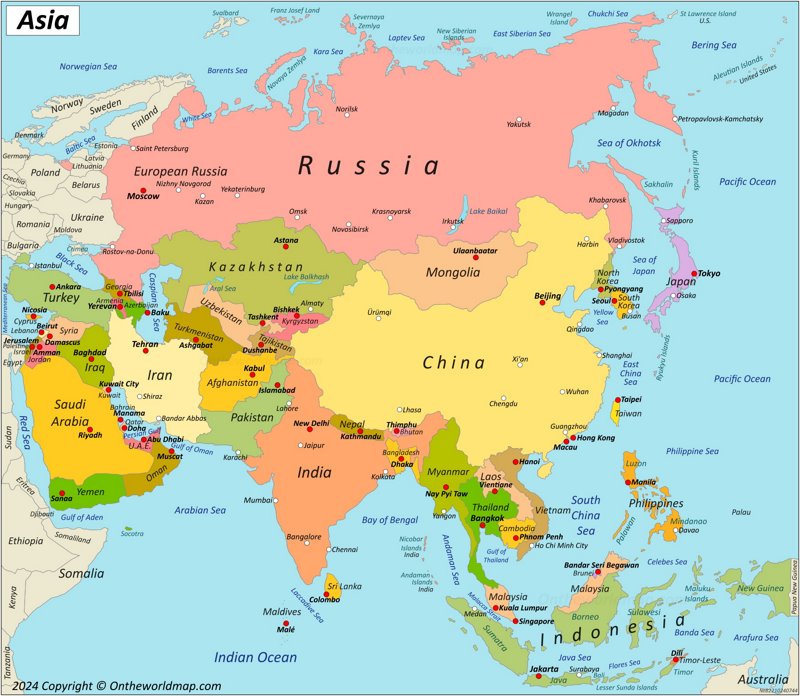
Map of Asia
TL;DR
Asia’s central banks navigate varying economic conditions, with China’s key lending rates holding steady, South Korea’s economy showing a strong rebound, and the Philippines facing a downgraded growth outlook. These actions reflect a regional balancing act between inflation pressures and economic growth targets.
Asian economies are demonstrating a varied economic landscape as central banks prepare for crucial interest rate decisions and key economic data emerges this week. Policymakers across the region weigh inflation pressures against growth imperatives, influencing monetary policy actions.
China’s loan prime rates (LPR), a benchmark for corporate and household lending, are expected to remain unchanged when set on Monday. This stability follows stronger-than-expected first-quarter GDP data and recent reflationary trends.
South Korea’s economy shows signs of a robust recovery, with its first-quarter GDP (Gross Domestic Product) forecast to grow 1.0% quarter-on-quarter. This marks a significant rebound from the 0.2% contraction recorded in the fourth quarter of 2025, driven primarily by strong export performance, particularly in the semiconductor sector.
The Philippines faces a revised economic outlook. Its 2026 GDP growth forecast has been downgraded to 4.5% from previous estimates. This adjustment stems from the nation's substantial exposure to global oil price fluctuations, which impact domestic costs and economic activity. Meanwhile, Indonesia’s central bank is also expected to hold rates steady, despite inflation exceeding its 2.5% target, supported by fuel subsidies and softening growth.
The stability in China's LPR indicates a cautious approach to monetary policy, balancing growth support with inflationary considerations. This stance suggests that current economic momentum may allow for policy patience rather than immediate intervention. For South Korea, the anticipated GDP rebound, fueled by exports, provides a buffer against global economic headwinds, highlighting the resilience of its export-oriented sectors.
The downgraded forecast for the Philippines underscores the vulnerability of oil-importing economies to commodity price volatility. Central banks like Bangko Sentral ng Pilipinas (BSP) must balance inflation targeting—where CPI has risen above its target—with supporting growth in a challenging external environment. Investors should monitor upcoming rate decisions from Indonesia and the Philippines this week, alongside Japan’s inflation and purchasing managers’ index (PMI) data, for broader regional economic indicators.
Continue reading
More in this thread
CVS Health's Strong Earnings Track Record and Positive ESP Suggest Another Beat Ahead of May 6 Report
David Amara
CVS Health Signals Potential Earnings Beat Ahead of May 2026 Report
David Amara
Carlisle (CSL) Exceeds Earnings Estimates, Signals Continued Strength
David Amara
Conversation
Reader notes
Loading comments...