ASEAN adopts fuel‑sharing framework as Iran war tightens energy markets
ASEAN leaders approve a regional fuel‑sharing framework to offset Iran war disruptions, while the Philippines declares a historic energy emergency.
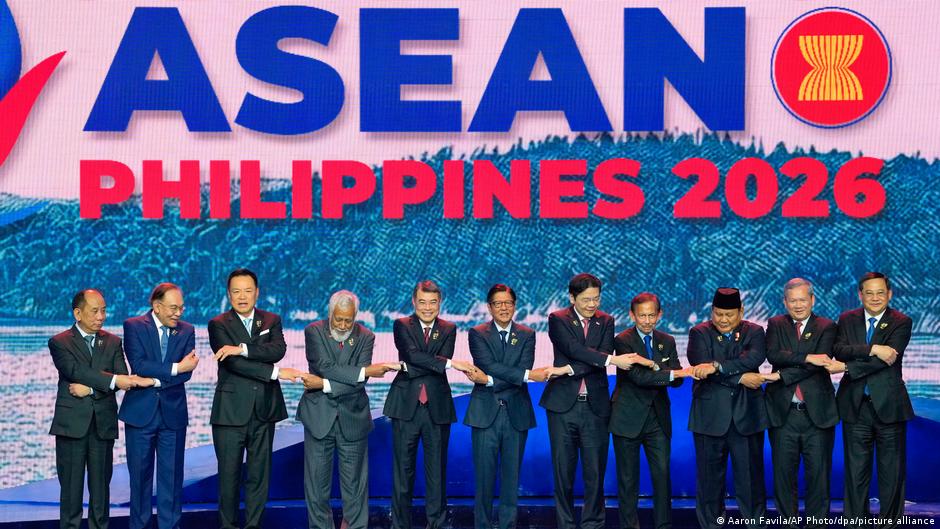
Philippinen Cebu 2026 | ASEAN-Summit | ASEAN leaders shake hands during a group photo
*TL;DR: ASEAN agrees on a fuel‑sharing framework to cushion the impact of the Iran war, but details remain unsettled as the Philippines declares a national energy emergency.
The summit in Cebu concluded with leaders adopting a set of measures aimed at mitigating the economic shock from the prolonged closure of the Strait of Hormuz, a key oil transit route. The bloc’s new fuel‑sharing framework seeks to pool petroleum resources among member states during supply disruptions.
ASEAN imports more than half of its crude oil and 17 % of its natural gas from the Middle East, making the region vulnerable to any interruption in that corridor. The Iran‑Israel conflict has kept the strait closed for over two months, driving global oil prices to record highs.
Philippine President Ferdinand Marcos Jr. welcomed the agreement but highlighted the lack of operational clarity. “How is the sharing? Who gets what? How do you pay for it? Is it an exchange? We haven’t done it before,” he said, underscoring the need for concrete protocols.
The Philippines declared a national emergency in late March after its strategic reserves fell to critically low levels, marking the first such declaration worldwide. Marcos warned that the economic fallout from the war could linger for years, noting that “a few weeks worth of disruptions will take years to be corrected.”
In addition to fuel sharing, ASEAN leaders pledged to develop a regional power grid, create a collective fuel stockpile, and reduce reliance on Middle‑East energy imports. These initiatives are expected to take considerable time to materialize, and the bloc has not yet identified which countries would receive priority supplies during a crisis.
The agreements reflect a broader push for energy security amid rising geopolitical risks. While the framework signals regional solidarity, its effectiveness will depend on how quickly member states can operationalize the sharing mechanisms and build the promised infrastructure.
What to watch next: Implementation timelines for the fuel‑sharing system, progress on the regional power grid, and any further emergency measures by ASEAN members as the Iran war continues.
Continue reading
More in this thread
Reform UK Takes 13 Councils as Labour Loses Over 1,300 Seats in England
Nadia Okafor
Former Cafe Chew Owners Capture Constable and Trustee Seats in Sandwich
Nadia Okafor
South Africa’s Constitutional Court Rules Parliament’s 2022 Impeachment Block Unconstitutional
Nadia Okafor
Conversation
Reader notes
Loading comments...