Amnesty Labels Netanyahu, Trump, Putin ‘Voracious Predators’ Fueling Global Human Rights Decline
Amnesty International's annual report criticizes leaders Netanyahu, Trump, and Putin for exacerbating global human rights issues and escalating international law violations.
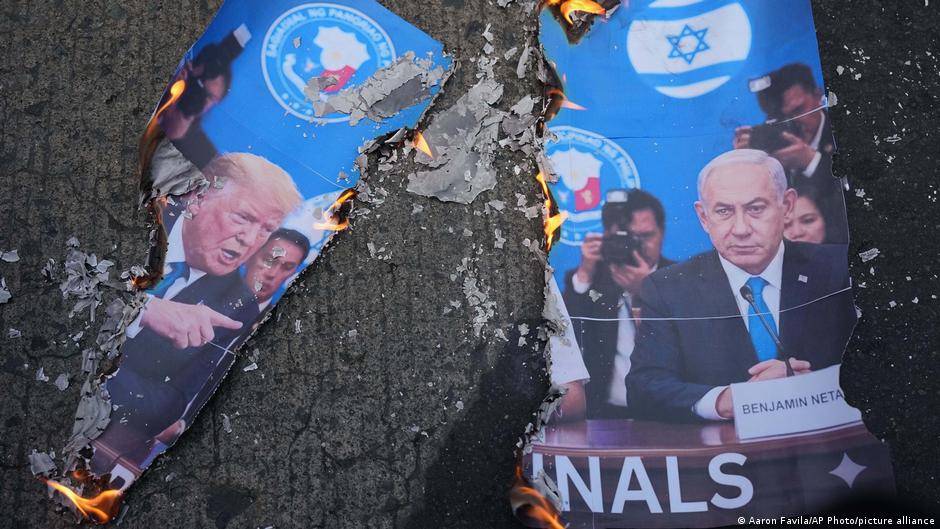
A picture of US President Donald Trump, left, and Israeli Prime Minister Benjamin Netanyahu burns as protesters hold a rally to condemn the Iran war near the US Embassy in Manila, Philippines on Friday, March 6, 2026
TL;DR
Amnesty International has criticized Prime Minister Benjamin Netanyahu, former President Donald Trump, and President Vladimir Putin, identifying them as key figures in a decline of global human rights. The organization’s annual report points to an intensifying environment where authoritarian practices and international law violations escalate worldwide.
Context Amnesty International's annual report, released Tuesday, asserts that a global environment allowing "primitive ferocity" to flourish has been developing for a long time. Agnes Callamard, the head of the global rights group, highlighted a significant departure from the international order that was painstakingly constructed over the past 80 years following world wars. This shift marks a sharp U-turn from principles of global cooperation.
Key Facts The report specifically cites actions by leaders from Israel, the United States, and Russia as primary drivers of this global trend. Amnesty International confirmed that Israeli attacks in Gaza since October 2023 have killed over 72,500 people. Simultaneously, a US-Israeli assault on Iran has resulted in more than 3,000 deaths. Callamard labeled Benjamin Netanyahu, Donald Trump, and Vladimir Putin as "voracious predators" whose conduct directly influences a worsening global landscape. Their actions, she noted, have an "absolutely dramatic" impact, encouraging other states to engage in similar behaviors. The report extensively documents intensified authoritarian practices and abuses of fundamental civil liberties across numerous nations, from Afghanistan to Zimbabwe.
What It Means Amnesty International indicates that many governments globally tend to appease these "predators" rather than actively confront their actions. This approach, the report suggests, allows for the proliferation of "copycat" behaviors, making the current human rights environment more aggressive and ferocious than in previous years. The organization points to some instances of "resistance," including youth-led protests and an increasing number of states joining international legal challenges. These efforts signal a continued push against the erosion of international laws and human rights. Observers will monitor whether governments move from appeasement to more confrontational stances in upholding global human rights standards.
Continue reading
More in this thread
Pope Leo Demands Prison Reform in Equatorial Guinea After Citing US Report of Torture and Overcrowding
Nadia Okafor
Pope Leo Condemns Equatorial Guinea Prison Abuses, Calls for Justice That Rebuilds Lives
Nadia Okafor
Connecticut House Bans Glock Conversion Switches That Enable Fully Automatic Fire
Nadia Okafor
Conversation
Reader notes
Loading comments...