Amazon Locks In 685,000‑Ton Carbon Credit Deal to Cut Methane from Indian Rice Fields
Amazon commits to purchase over 685,000 metric tons of carbon credits from an Indian rice-farming project, reducing methane emissions through new practices.
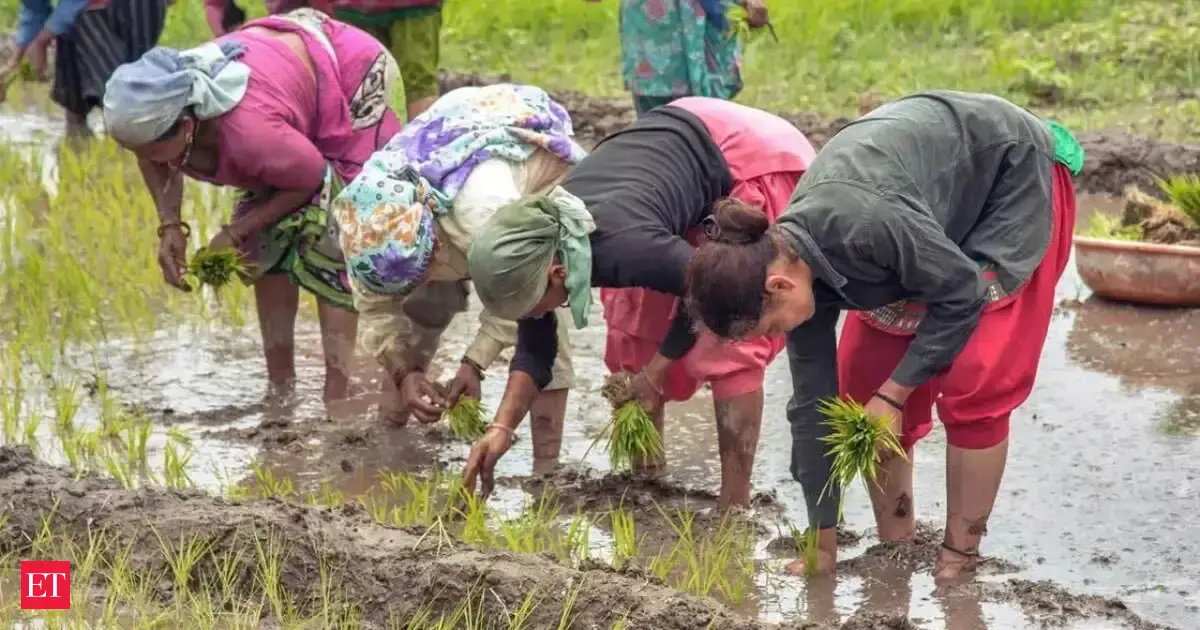
Amazon has committed to purchase over 685,000 metric tons of CO2-equivalent carbon credits from a rice‑farming emissions reduction project in India. This agreement directly targets methane, a potent greenhouse gas, through agricultural practice changes.
Rice cultivation accounts for 8-10% of global methane emissions, making it the second-largest agricultural source. Methane acts as a potent greenhouse gas, trapping significantly more heat than carbon dioxide over a shorter timeframe. India, supporting over 100 million livelihoods through its rice sector, also holds the world's largest rice cultivation area and ranks as the third-largest global methane emitter. Addressing these emissions offers a crucial opportunity for immediate climate impact.
Amazon announced its commitment to purchase more than 685,000 metric tons of carbon dioxide equivalent (CO2e) credits. These credits will come from a project specifically designed to reduce methane emissions within Indian rice fields. Michelle Jolly, Amazon’s Director of Sustainability Solutions and Services, emphasized that methane is a “super pollutant” demanding immediate action. She further noted the deal reflects Amazon’s commitment to securing high‑quality, verifiable carbon credits. The agreement backs The Good Rice Alliance (TGRA) program, which involves over 13,000 smallholder farmers across 35,000 hectares. Farmers adopt practices such as Alternate Wetting and Drying (AWD) and Direct Seeded Rice (DSR), which are improved water-management techniques that significantly cut methane output from rice cultivation.
This partnership represents a substantial corporate investment in mitigating agricultural greenhouse gas emissions. By acting as the primary buyer, Amazon supports the scaling of sustainable farming practices directly. The focus on high-integrity carbon credits, verified through field measurements and independent validation, aims to ensure measurable climate benefits. Such collaborations offer a model for private sector engagement in environmental solutions that also provide economic benefits to farming communities.
The success of this large-scale program could demonstrate an effective pathway for reducing agricultural methane globally. Stakeholders will observe how this initiative impacts emissions reduction targets and influences broader corporate strategies for sustainable agriculture investment.
Continue reading
More in this thread
Oil Prices Spike Above $106 After Trump Declares Strait of Hormuz Sealed
Elena Voss
Robotics PE Boom Drives China’s Hard‑Tech Shift While 50k Firms Starve of Follow‑On Funding
Elena Voss
HeidelbergCement India Promoter Affirms Unencumbered Shares Through FY26
Elena Voss
Conversation
Reader notes
Loading comments...